
WINERIES
Bottling Yamanashi's Nature! Asking Naomichi Kondo About Komaen Vineyard's Dedication!

To those reading NIHON WINE.JP, there are surely many Koshu enthusiasts among you. At the Washi Award contest held in Hong Kong in 2024, the only Koshu to win the top Platinum award was Komaen Vineyard's "Cru Nishino Koshu"...
Contents
Among the readers of NIHON WINE.JP, there are surely many Koshu enthusiasts.
The only Koshu wine to win the top Platinum award at the 2024 Washu Award held in Hong Kong was "Cru Nishino Koshu" from Comazono Vineyard.
Scented with refreshing citrus aromas and marked by clear, beautiful acidity, this Koshu was a bottle that deeply impressed the judges, who included top sommeliers and industry professionals active in East Asia.
To uncover the secrets and dedication behind crafting such an impressive Koshu, we interviewed company representative Nobuyuki Kondo.
CHAPTER 01
What Kind of Winery Is Comazono Vineyard?
Comazono Vineyard is located in Enzan, Yamanashi Prefecture, and though small in scale, it celebrates its 73rd year this year.
Compared to Katsunuma within Yamanashi Prefecture, the area is relatively flat.
It is a scenic region rich in historic sites, including Erinji Temple—the family temple of the Sengoku warlord Takeda Shingen—as well as Enzan Onsen Village, said to have been discovered by Zen Master Bassui who founded Kogakuji Temple; Enzan Kogakuji Temple itself, the head temple of the Rinzai Kogakuji sect; and Oso Residence, the former estate of Mitsutsune and Mitsutoshi, the fourth and fifth sons of Kagami Toemitsu of the Kai Genji clan.
Comazono Vineyard owns three vineyard plots situated at elevations between 280 and 460 meters—the Comazono, Kawakubo, and Nishino plots—managing a total of about 2 hectares with a very small team.
They cultivate Koshu in the Comazono plot, while European varieties such as Pinot Noir, Bijou Noir, and Syrah are grown in the Kawakubo and Nishino plots.
CHAPTER 02
Grape Cultivation Equivalent to Organic Farming
We were shown around the Comazono vineyards.
This area is near the Fuefuki River, a tributary of the Fuji River—one of Japan's three fastest-flowing rivers. Because the river frequently flooded in the past, about 3 meters of the main soil layer consists of accumulated river sand, which provides excellent drainage.
On the other hand, compared to clay soils, young vines grow at a slower pace. However, Mr. Kondo explains that this carries the benefit of producing solid fruit yield without needing to train the vine trunks too wide.
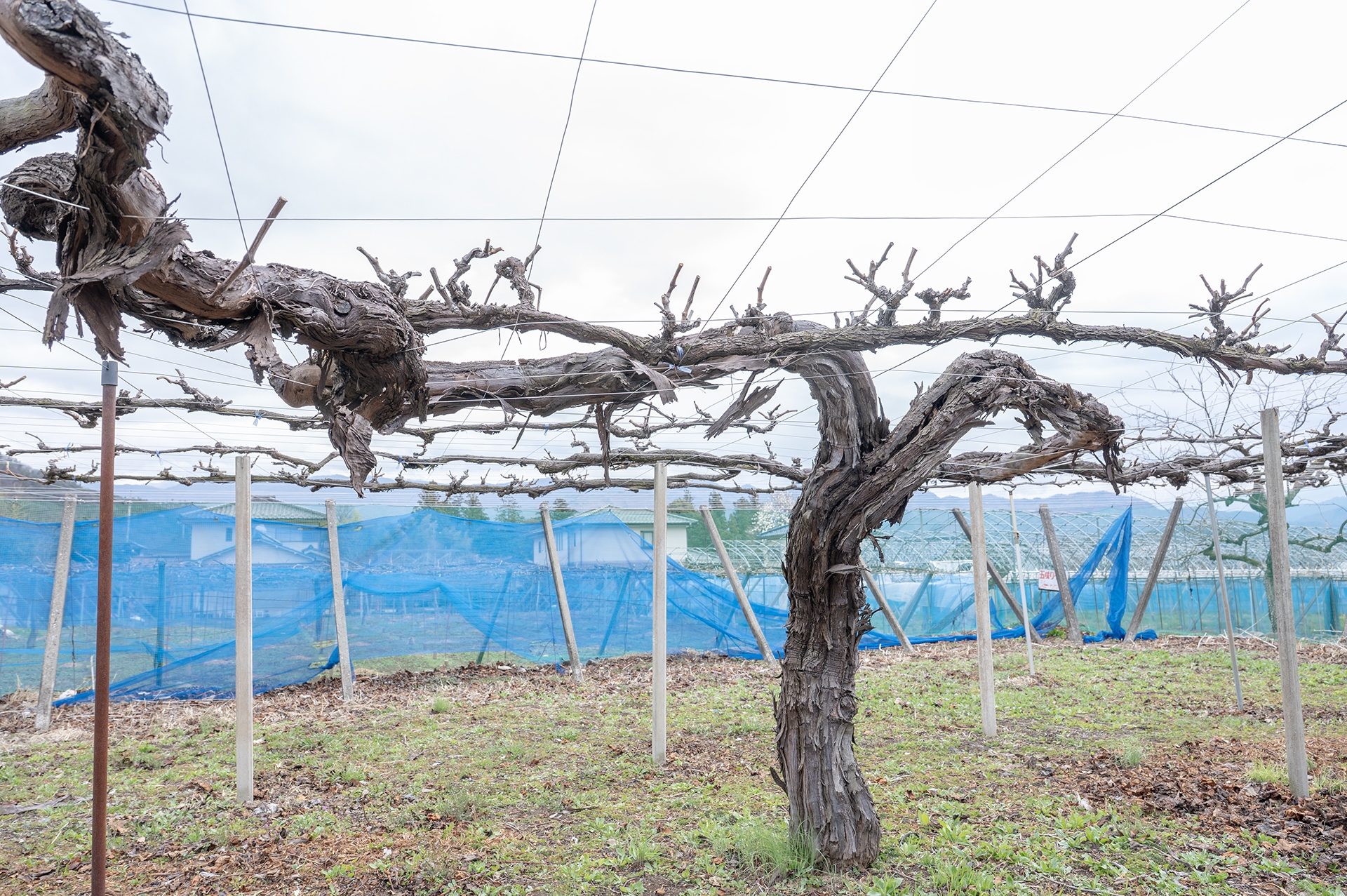
All grapes are grown on overhead pergolas (tana). During winter pruning in 2015–2016, they switched from the long-cane X-shape pruning system to spur pruning, and newly planted plots are trained in spur-pruned H-shape or WH-shape configurations. Mr. Kondo notes that while this reduces grape yields, it increases concentration and results in higher-quality wine.
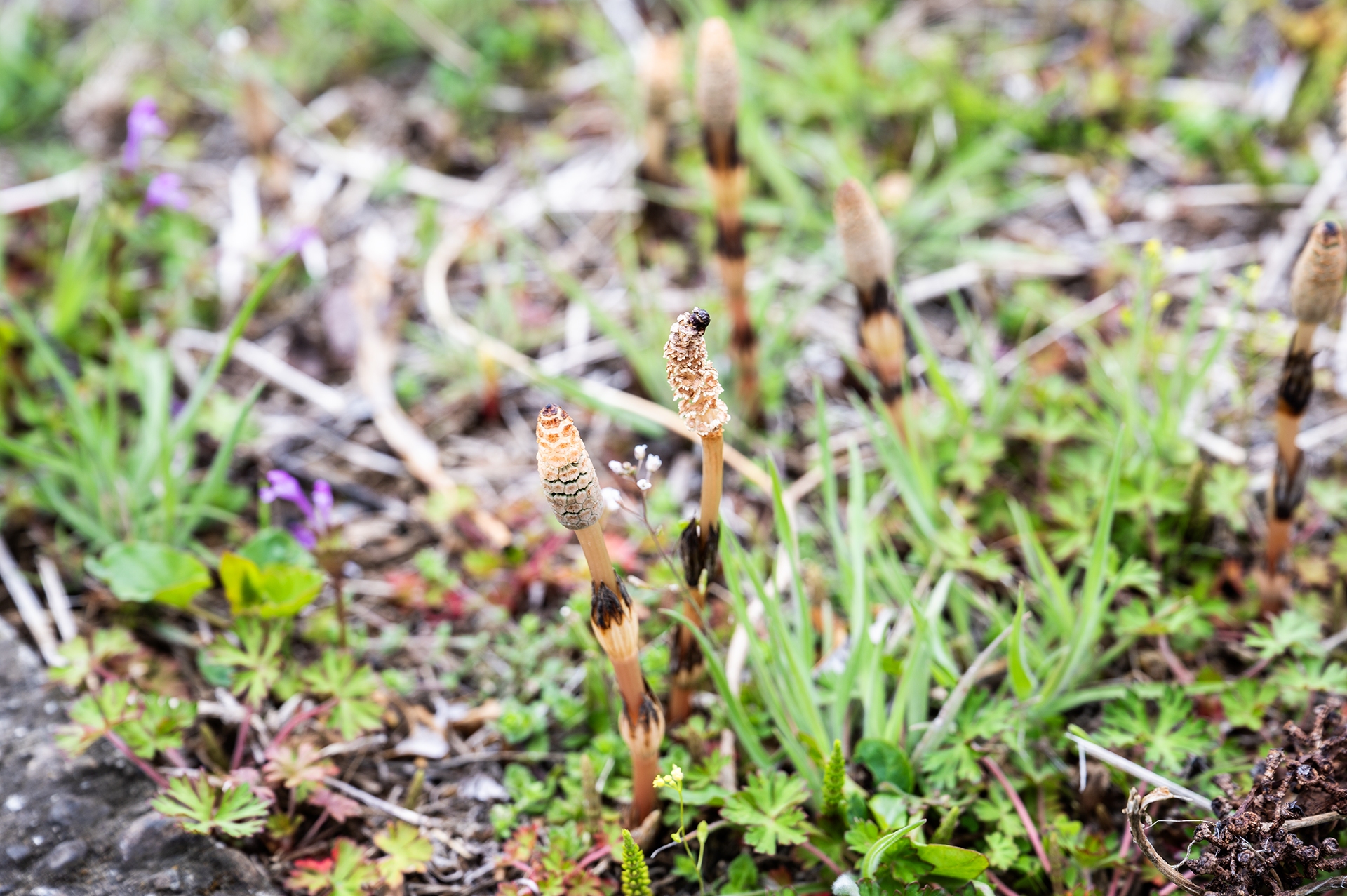
When we visited, spring weeds were just beginning to sprout.
They practice organic cultivation utilizing cover vegetation.
What particularly caught our eye in the vineyard was an 80-year-old vine.
This Koshu vine was originally cultivated for table grapes even before the founding of the winery's predecessor, Gomi Wine, but today it is still actively used for winemaking.
Furthermore, they are carrying forward the winery's legacy by having a nursery graft cuttings from these old vines onto rootstock to cultivate and plant new vines.
CHAPTER 03
Dedication to Winemaking
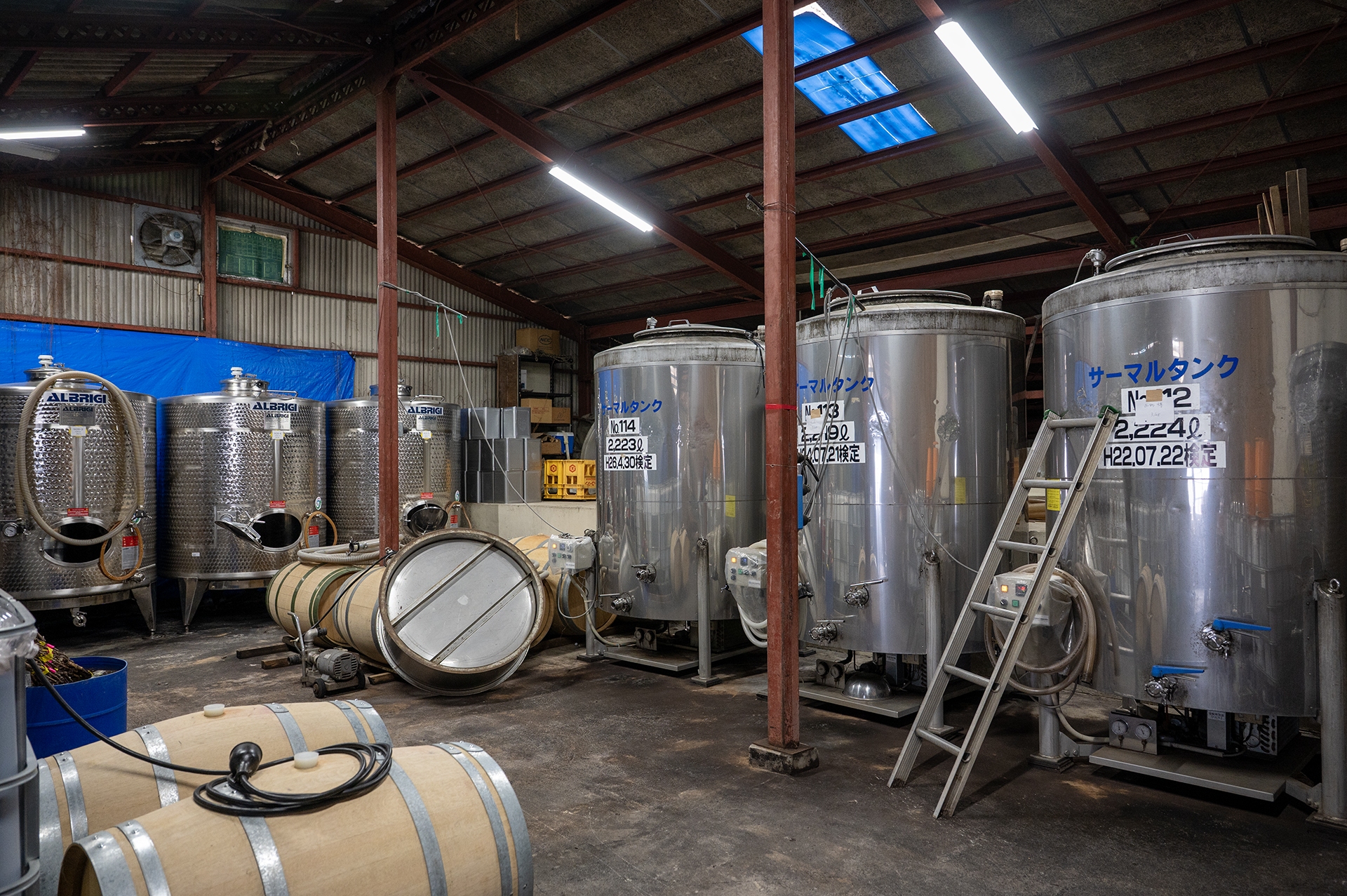
Visually as well, it is an exceptionally clean environment.
As mentioned earlier, because they invest immense care into growing their grapes organically, one of Mr. Kondo's key philosophy points is to express that unique grape character in the wine as directly as possible.
For this reason, he makes a conscious effort not to over-craft the wine technically, meaning the yeasts, barrels, and production methods used do not differ drastically from wine to wine.
His approach brings to mind the fundamental principle that "great wine comes from great grapes."
Ultimately, the differences in climate, terroir, soil, and elevation among the "Comazono," "Kawakubo," and "Nishino" plots managed by Mr. Kondo translate directly into the distinct aromas and flavors of each wine.
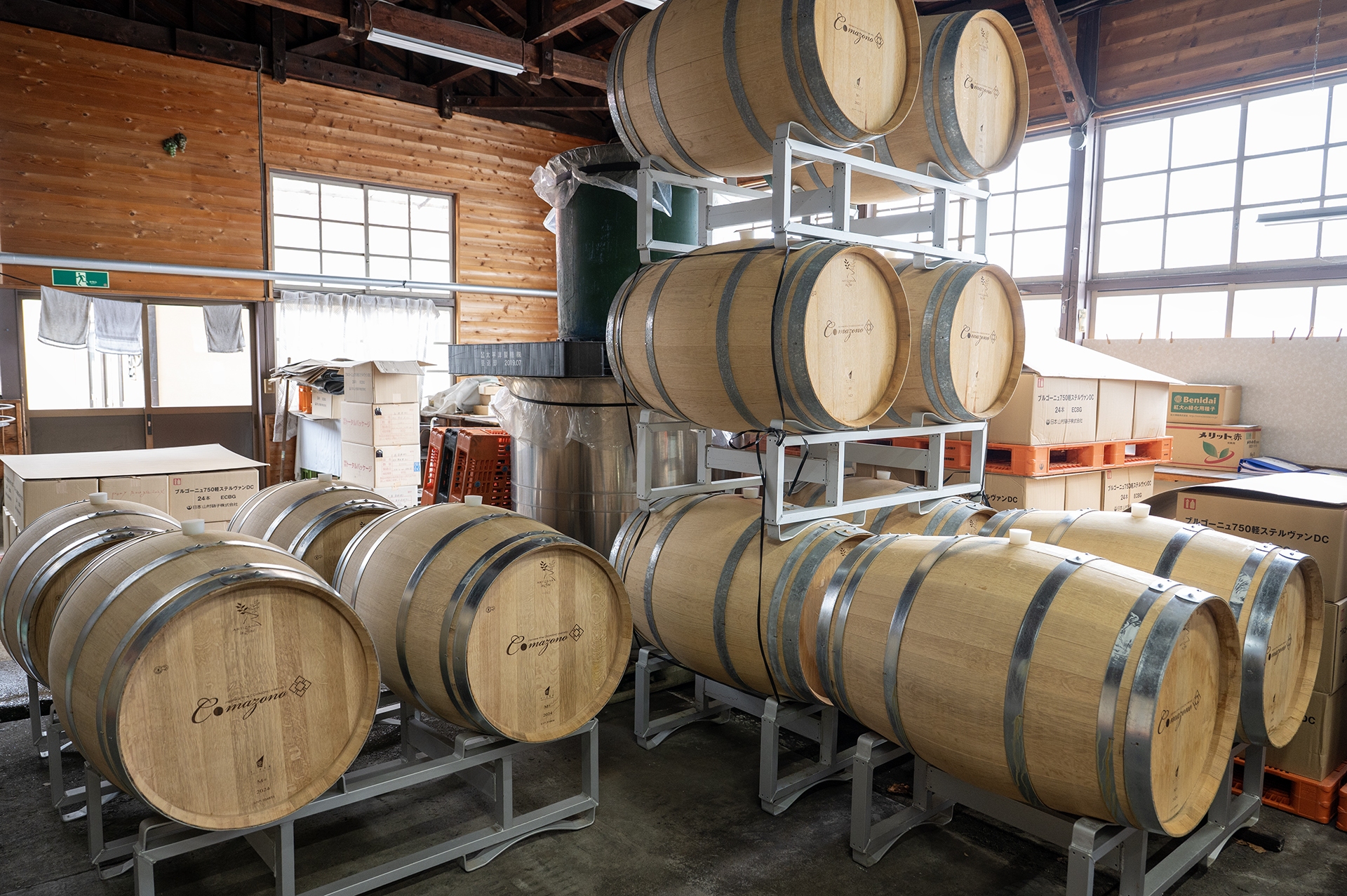
The barrels used are all identical as well, regardless of label, variety, or style.
They are used simply to allow oxygen to seep slowly through the wood for moderate oxidative aging.
Their commitment goes so far that newly purchased barrels are filled with water for several days to neutralize them, softening any overly strong oak aromas and wood compounds before they are put to use.
CHAPTER 04
Wine Tasting
Mr. Kondo graciously invited us to taste Koshu, Pinot Noir, and Bijou Noir from the Tao and Nishino series.
CHAPTER 05
Comazono Vineyard Lineup
There are three main series.
Pony: A series using grapes grown by contracted farmers in Yamanashi Prefecture.
As Pony is their most widely distributed wine, you can easily give it a try. Many people are surprised to get this level of flavor at this price!
Tao: Wines made from estate-grown grapes in Enzan, passed down through generations.
Where does the name Tao come from? It is said to originate from "Taoism," one of the three major Chinese religions (Confucianism, Buddhism, and Taoism), following the teaching of "living in harmony with the natural laws of heaven and earth."
Cru Nishino: Wines made from grapes cultivated in newly leased vineyards in Minami-Alps City.
Because Cru Nishino is carried only by contracted restaurants and specialty shops, if you see one, we recommend buying it immediately!
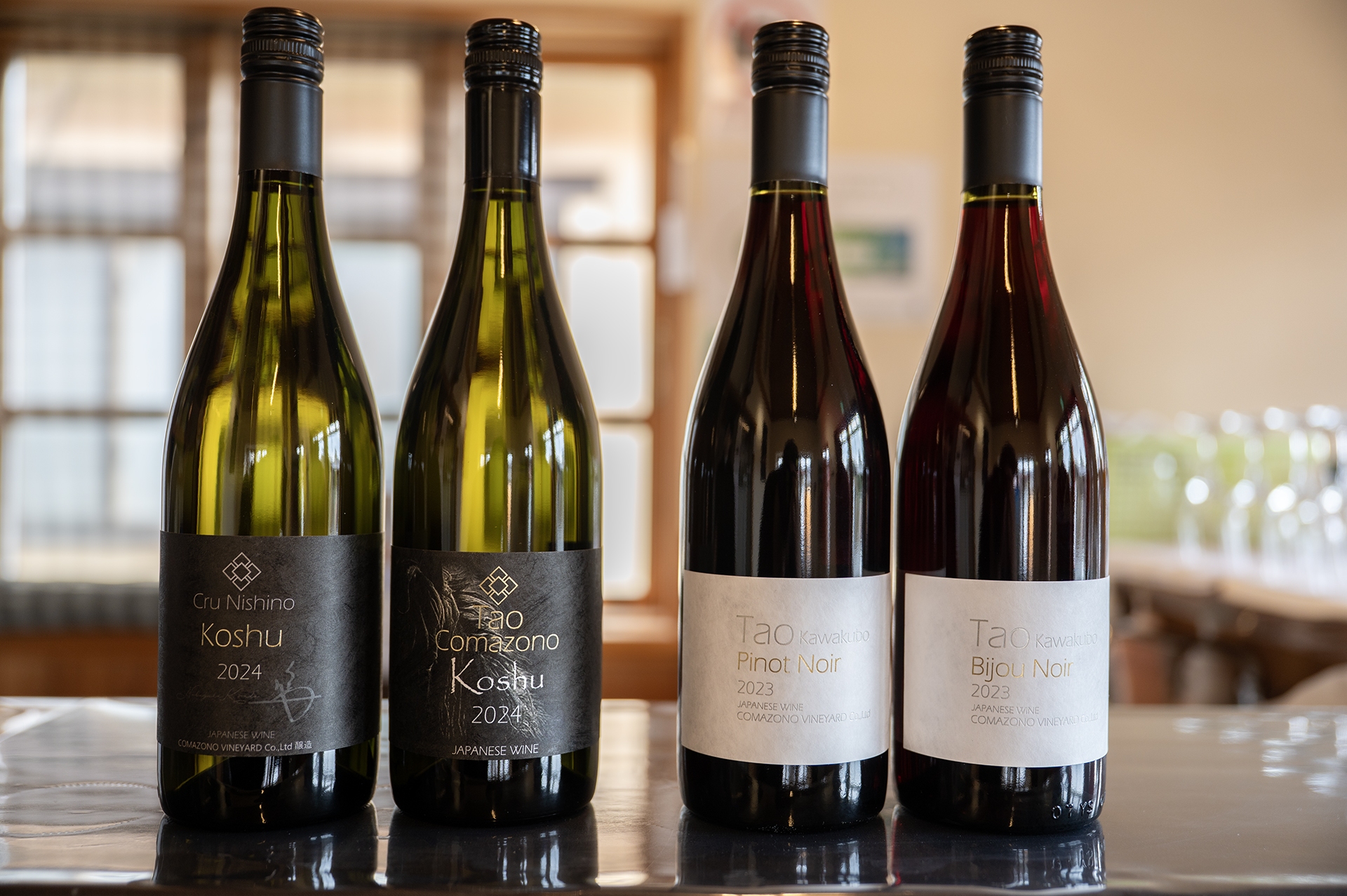
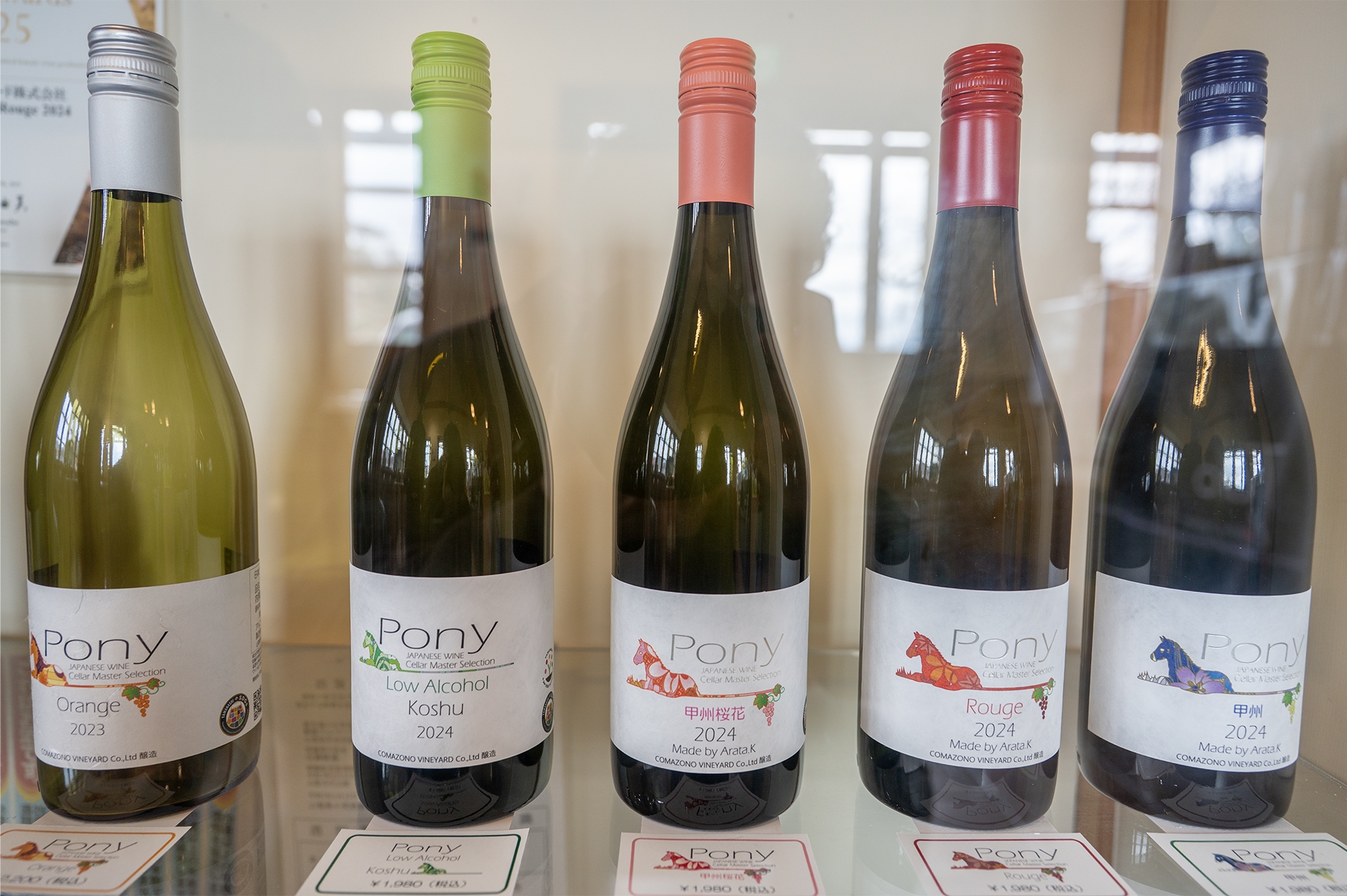
The origin of Tao "Aligning with the laws of heaven, earth, and nature—these words perfectly express Mr. Kondo's approach to winemaking.
Be sure to taste the natural character of each vineyard!
CHAPTER 06
Buy Komazono Vineyard wines here!
We also feature the rare "Cru Nishino" series, which is available exclusively through authorized retailers!
There are even bottles that have won awards at international wine competitions!!
If you're interested, be sure to check them out.
About the author
Miyuki Isobe
Stories covering the same region, newest first.
- WINE & DININGThe Manns Wines You Think You Know May Be Out of Date — From Volume to Quality: Where Manns Wines Is Today6 MAY 2026Miyuki Isobe
- WINERIESThe People Who Create the “Beginning” of Wine: Visiting Suda Grape Nursery in Yamanashi Prefecture5 JAN 2026Miyuki Isobe
- WINERIESFrom a Winery in Manriki, Yamanashi: Cave an’s Winemaking That Has Mastered the Basics12 DEC 2025Miyuki Isobe
- WINERIESBringing Refreshing Relief to Sweltering Days! Delivered from Heavy Snow Country: Housui Winery23 JUN 2025Miyuki Isobe
- WINE & DINING[Part 2] Restaurant SAI 燊 — An Evening Indulging in the Ultimate Pairing of "Oku-Yamanashi Cuisine" and Japanese Wine17 NOV 2024Miyuki Isobe
- WINE & DINING[Part 1] Restaurant SAI 燊: An Evening to Relish Supreme Pairings of "Oku-Yamanashi Cuisine" and Japanese Wine17 NOV 2024Miyuki Isobe
Wineries in this region
REGIONAL WINERIESRead → Know → VisitWineries in 山梨県. Find somewhere to visit.