
WINERIES
From a Winery in Manriki, Yamanashi: Cave an’s Winemaking That Has Mastered the Basics
Contents
- 01Established in 2022: Meticulous Winemaking Made Possible by Small-Scale Production
- 02South-facing slopes, clay soil: Creating a vineyard that is "ideal for grapes" and "tough for humans"
- 03Attentive winemaking made possible by small scale
- 04Learning the Essence of Winemaking in France and Japan
- 05Aiming for "Wine That Doesn't Get in the Way of Food"
- 06Introducing Cave an's Wines
- 07In Closing
- 08Purchase here
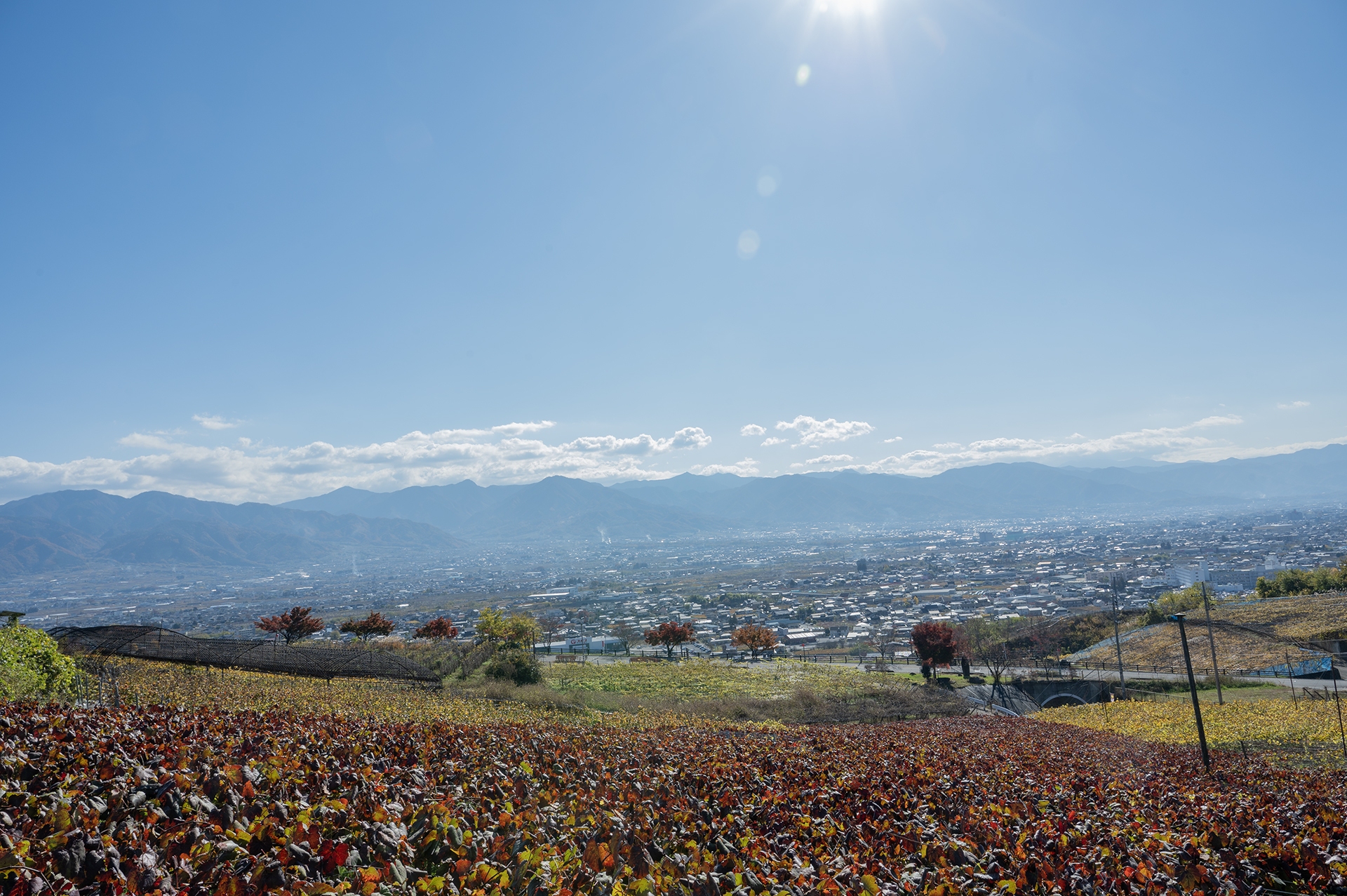
Manriki, Yamanashi City, Yamanashi Prefecture. I visited during a particularly beautiful season when the mountains were dyed in autumn colors and the Koshu leaves had turned a brilliant red. Nestled in the Manriki district,"Cave an"'s estate vineyard receives abundant sunlight and feels like a true "power spot" that brings a smile to anyone who visits.
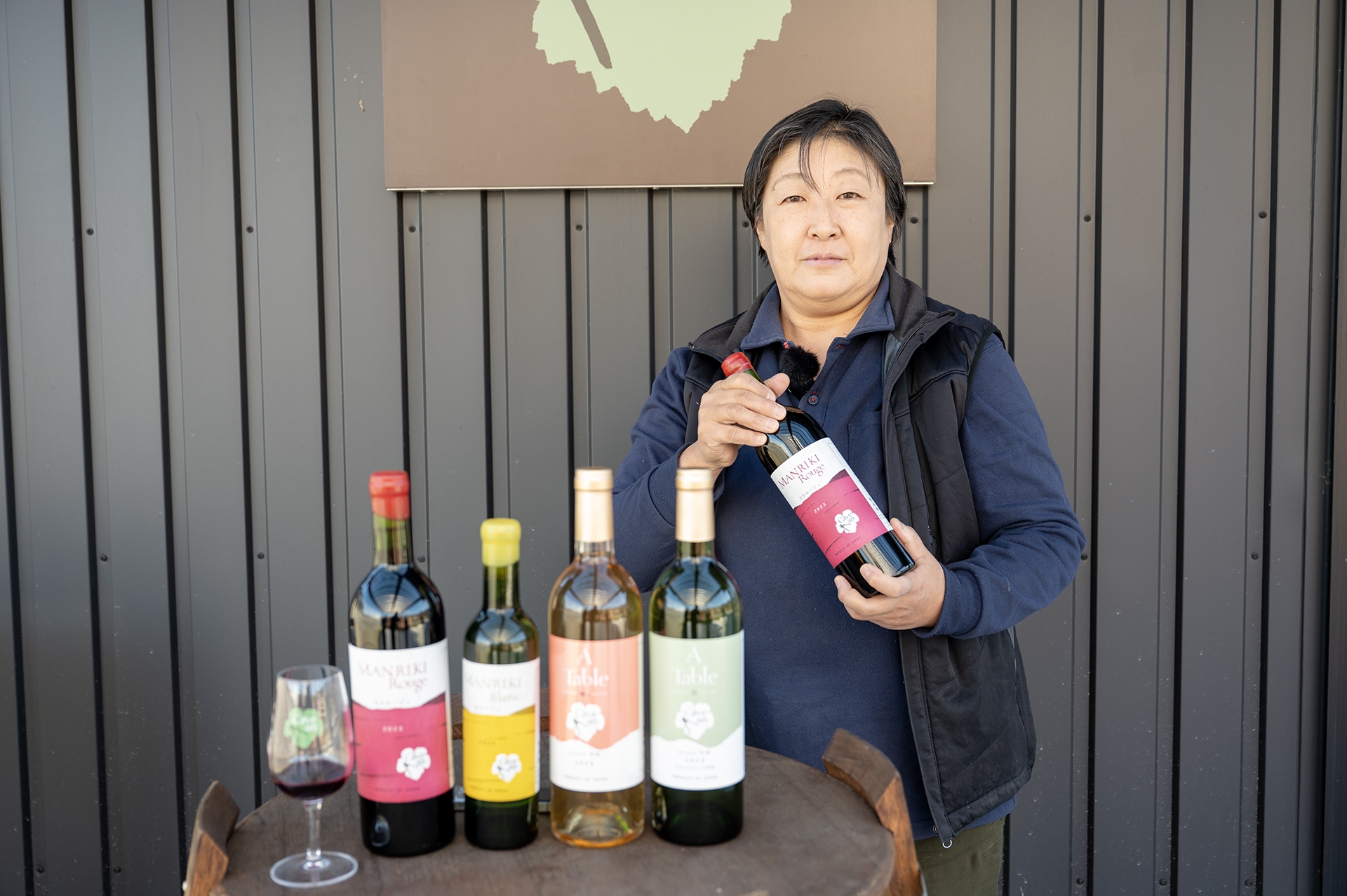
We spoke with Masako Anzo, representative of the winery.
CHAPTER 01
Established in 2022: Meticulous Winemaking Made Possible by Small-Scale Production
Cave an is a winery that used Yamanashi's Special Wine Zone designation in 2022 framework to obtain its winemaking license, and is currently in its fourth year as a boutique winery.
They create wines that cherish regional character, focusing on grapes grown in Yamanashi Prefecture.
Currently managing 1.4 hectares of vineyards, they produce around 6,000 bottles annually.
While Koshu is their mainstay, in recent years they have actually been focusing on Petit Manseng and Tannat—European varieties suited for warmer climates.“Petit Manseng in particular is a very interesting variety right now. Tannat has solid tannins and yields great color every year.”they say.
In the vineyard, they are also trying a "mixed planting" method of alternating rows of Merlot and Tannat, taking on the challenge of cultivation while exploring varietal compatibility and the characteristics of the terroir. Tannat is rich in tannins and solidly structured, but its flavor tends to be somewhat monotonous, like dark chocolate. Merlot, on the other hand, leaves a little to be desired in terms of color development in this vineyard, but brings rich fruitiness to the finished wine. With the two varieties serving as the bones and flesh respectively, it results in a well-balanced red wine.
CHAPTER 02
South-facing slopes, clay soil: Creating a vineyard that is "ideal for grapes" and "tough for humans"
The vineyard in the Manriki district is locatedat an elevation of 430 metersona steep, south-facing slopewith a spectacular view looking directly toward Mt. Fuji. The clay soil drains well, sunshine is ideal, and air circulation is excellent.
"It's the best environment for grapes. But it's quite tough for humans."
Heavy labor due to the steep slopes, narrow paths making car access difficult, and relentless weed growth driven by abundant sunlight...
Even so, Masako believes in the potential of this land and diligently carries out the vineyard work day after day.
For vine training methods, she uses overhead trellis, vertical trellis, and short-spur overhead cordon, tailored to the grape variety and the parcel of land.
She determines the optimal solution based on factors such as whether a trellis was already in place when renting the plot and the characteristics of the grape variety.
In a corner of the vineyard, komatsuna (Japanese mustard spinach) and arugula grow in abundance. Thinking "I might as well grow something edible," she planted seeds a few years ago. Because no herbicides are used in the vineyard, these vegetables naturally sprout back every year even after being harvested. As someone who sometimes hesitates at the price of arugula in Tokyo supermarkets, I cannot help but feel envious. They also harvest produce like zucchini and eggplant right from their own vineyard.
Diligently working the land alongside nature, then enjoying meals made with home-grown vegetables paired with wine—it really makes you think that a genuinely "rich life" might be found in moments like these.
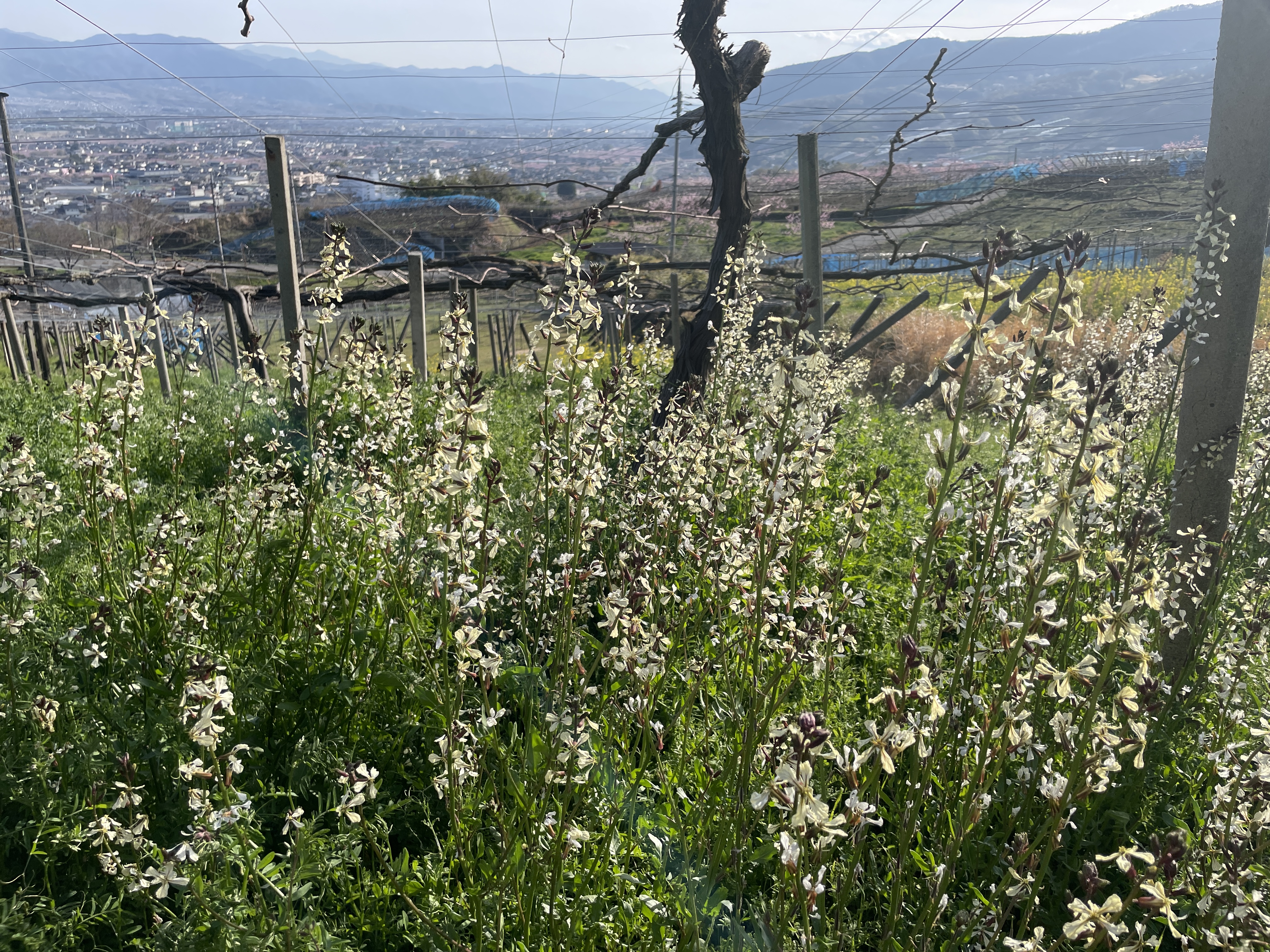
Arugula blooming in the spring vineyard
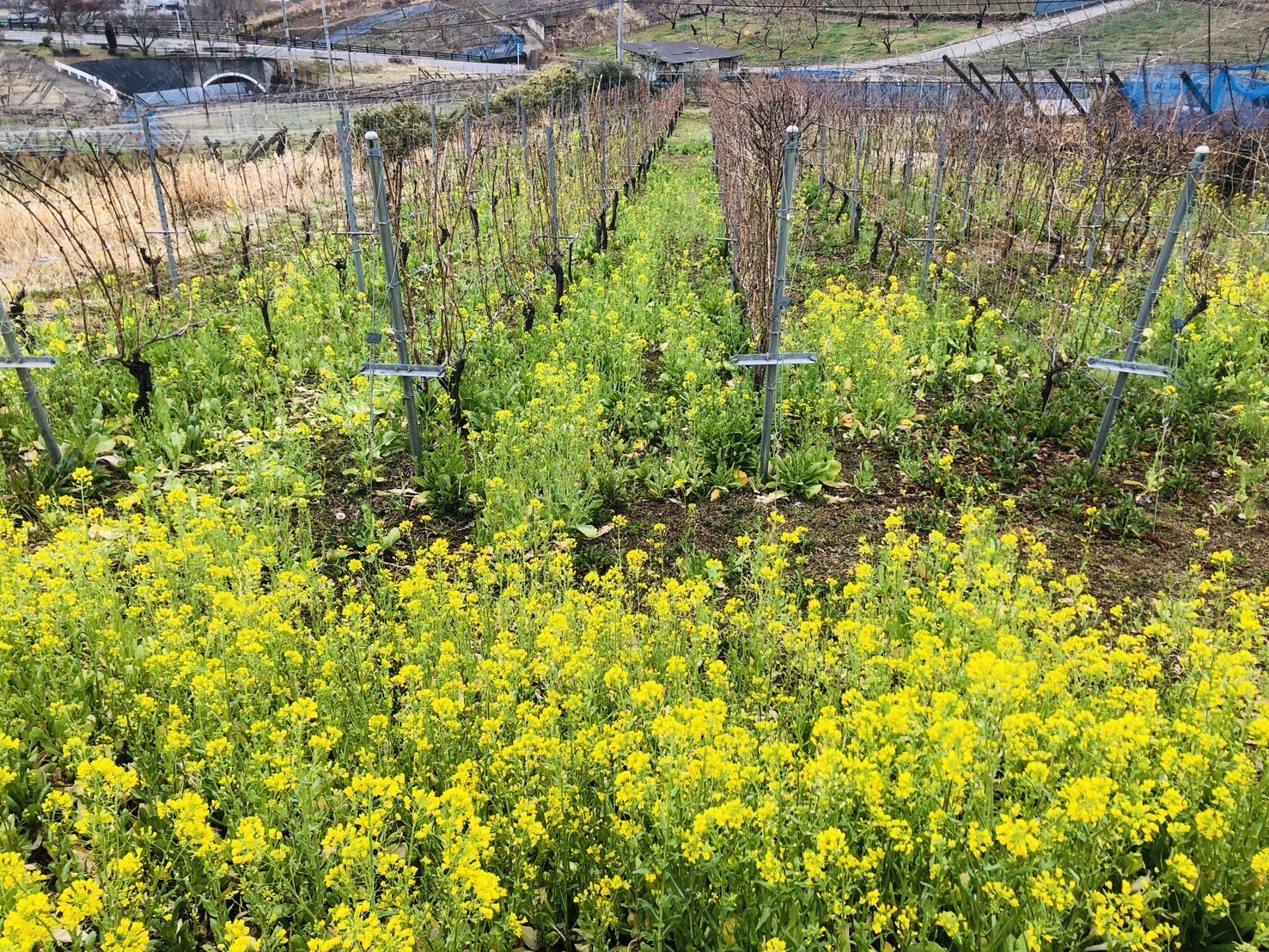
Komatsuna flowering in spring
CHAPTER 03
Attentive winemaking made possible by small scale
The winery is compact, but packed with meticulous details.
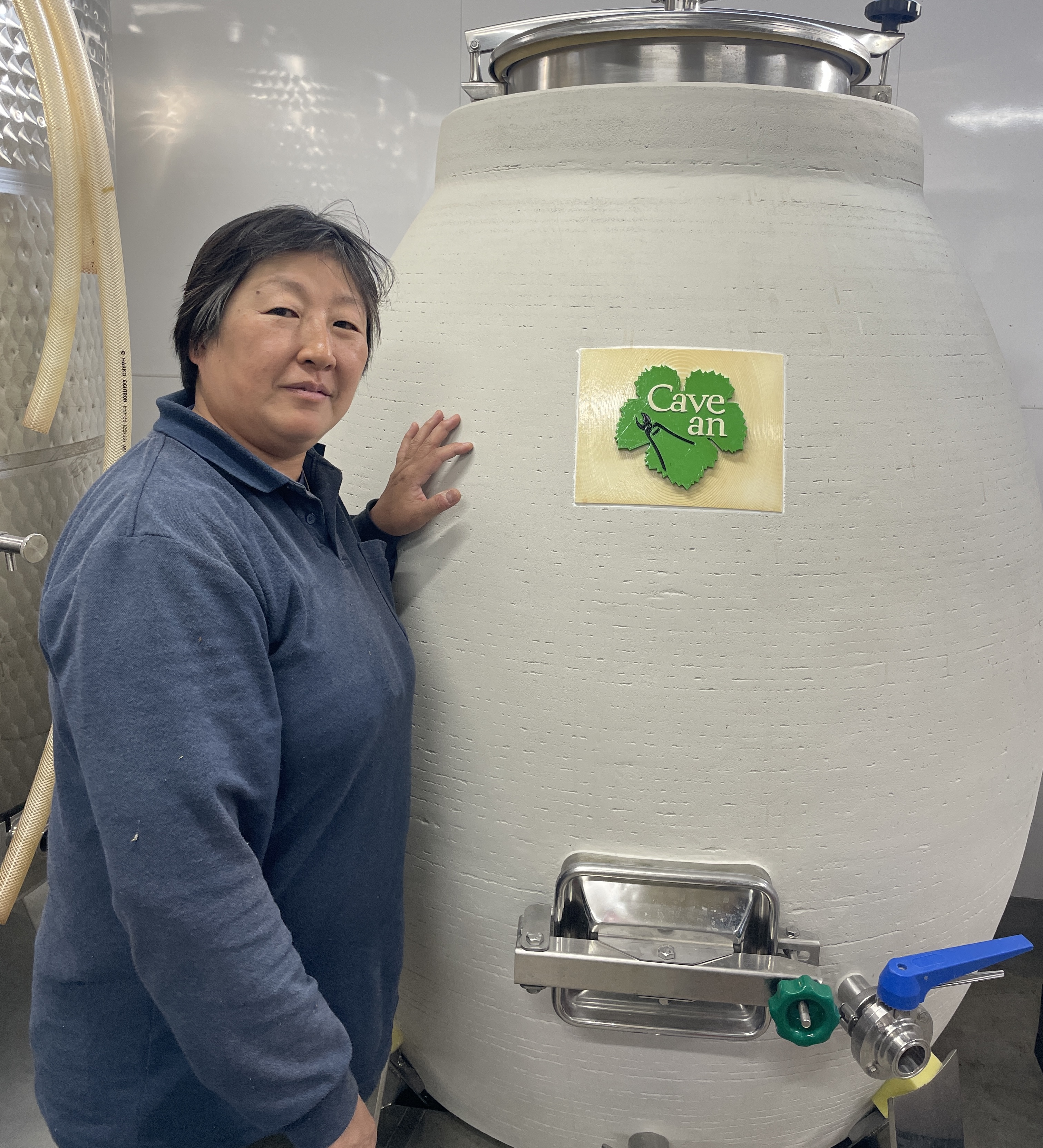
After crushing and destemming, the grapes are moved to tanks by forklift. In addition to the stainless steel tanks, a distinctive feature isa cute concrete tank made in Hokkaido bearing the Cave an logo.
Inside this tank, skin-contact Koshu is reportedly placed.
"Skin-contact Koshu can easily become astringent, so I use concrete or resin tanks that allow a little oxygen through to help create a smoother finish."
Using it for storage rather than fermentation to bring out a soft flavor—this personal commitment and delicate approach leave a strong impression.
CHAPTER 04
Learning the Essence of Winemaking in France and Japan
Masako spent many years making wine at Marufuji Winery in Katsunuma, also located in Yamanashi Prefecture. Later, when she moved to France due to her husband's job transfer,she gained winemaking experience in Bordeaux as well.
"I used to think they were doing something special in France. But in reality, it was almost identical to the approach in Japan. The decisive difference lies in the 'quality of the grapes.'"
Rather than a gap in technology, it comes down to how thoroughly one adheres to the basics, along with the inherent potential of the grapes themselves.
This firsthand experience seems to have brought the philosophy of Cave an into even clearer focus.
"Growing good grapes and remaining faithful to the basics—that is the core of everything."
She values facing the grapes and the land directly, faithfully expressing their natural individuality.
CHAPTER 05
Aiming for "Wine That Doesn't Get in the Way of Food"
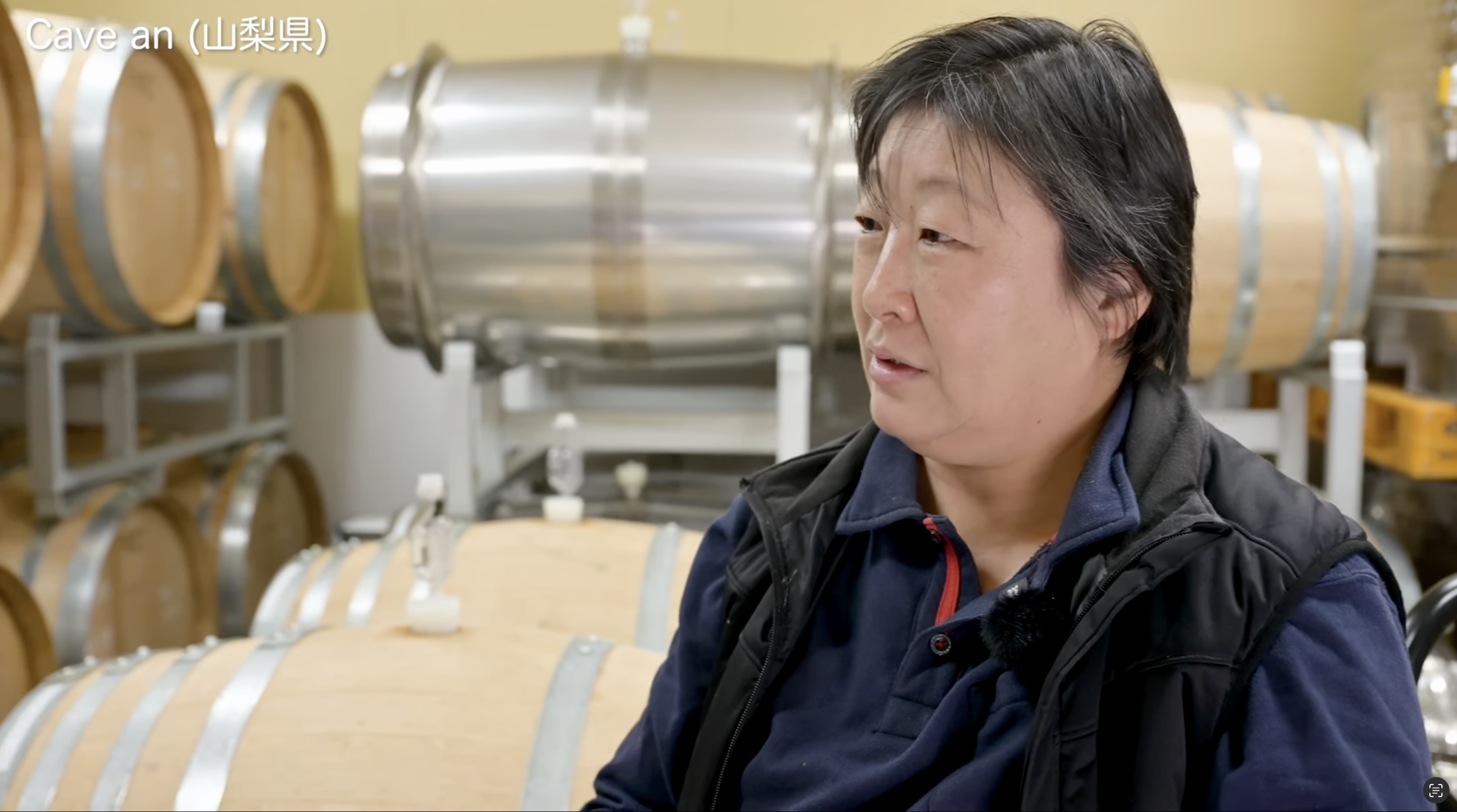
Masako's winemaking theme is clear and straightforward.
“We aim for wines that don't get in the way of the food—the kind where you're drinking it with a meal, and before you know it, your glass is empty.”
Yes,Wines that complement the Japanese dining table.
That is the core style of Cave an.
CHAPTER 06
Introducing Cave an's Wines
◆ À Table Series (100% Koshu) — Two bottles that complement everyday meals
“À table” means “Dinner is served!” in French. True to its name, this series pairs easily with everyday meals, making it ideal to enjoy with food. Both are“table wines where, before you know it, you've finished your glass,”they say.
[À Table Koshu Sur Lie (Dry)] (White)
Crisp, delicate, and smooth-drinking.
【À Table Koshu Kamoshi】(Orange Wine)
Made using concrete tanks. Macerated with the skins and seeds, it possesses a touch of astringency and complexity.
With a good balance of fruitiness and umami, it pairs well with seafood and other dishes.
◆ Premium Series
This series is perfect for days when you want to put a little extra effort into making dinner, or for sharing at the table with guests. We asked Masako, an accomplished cook, for her recommended pairings for each wine.
・Manriki Blanc (Petit Manseng-based) — Tropical aromas and a light sweetness
A white wine based on Petit Manseng, which Masako calls "the most interesting right now."
Gorgeous aromas of tropical fruit. Essentially dry, yet with a subtle hint of sweetness.
Recommended pairing:
・Corn mousse
• Saikyo-yaki (miso-marinated grilled fish)
• Sweet Japanese dishes made with soy sauce, mirin, and sugar
• Asian dishes finished with a squeeze of lemon or lime
◆ Manriki Rouge (5-variety blend) — An elegant, soft red
Reds grown in Manriki, with its almost excessive sunlight, are said to display not heavy intensity, but “soft elegance.” In appearance, it falls midway between bright red and dark black, featuring a gorgeous berry aroma, balanced acidity, and a rounded mouthfeel despite its youth.
Recommended food pairings:
• Lasagna
• Meat dishes simmered in Hatcho miso
• Soy sauce-based Japanese cuisine
• Japanese fermented foods in general
CHAPTER 07
In Closing
At the end of our conversation, Masako shared her honest, heartfelt passion for winemaking.
“Japanese wine has truly become delicious. I really hope people will savor it alongside the beautiful scenery of Yamanashi. We are a small winery, but we work with all our heart. Please come visit Yamanashi.”
A refreshing breeze blowing through the south-facing vineyards.
The meticulous, dedicated work carried out in both the vineyard and the winery.
The wines of Cave an are surely the culmination of those efforts.
CHAPTER 08
Purchase here
About the author
Miyuki Isobe
Stories covering the same region, newest first.
- WINE & DININGThe Manns Wines You Think You Know May Be Out of Date — From Volume to Quality: Where Manns Wines Is Today6 MAY 2026Miyuki Isobe
- WINERIESThe People Who Create the “Beginning” of Wine: Visiting Suda Grape Nursery in Yamanashi Prefecture5 JAN 2026Miyuki Isobe
- WINERIESBringing Refreshing Relief to Sweltering Days! Delivered from Heavy Snow Country: Housui Winery23 JUN 2025Miyuki Isobe
- WINERIESBottling Yamanashi's Nature! Asking Naomichi Kondo About Komaen Vineyard's Dedication!21 APR 2025Miyuki Isobe
- WINE & DINING[Part 2] Restaurant SAI 燊 — An Evening Indulging in the Ultimate Pairing of "Oku-Yamanashi Cuisine" and Japanese Wine17 NOV 2024Miyuki Isobe
- WINE & DINING[Part 1] Restaurant SAI 燊: An Evening to Relish Supreme Pairings of "Oku-Yamanashi Cuisine" and Japanese Wine17 NOV 2024Miyuki Isobe
Wineries in this region
REGIONAL WINERIESRead → Know → VisitWineries in 山梨県. Find somewhere to visit.