
KNOWLEDGE
Blind Tasting Has No Single Right Answer?! Asia’s No. 1 Sommelier Reeze Choi on How to Discover What You Like

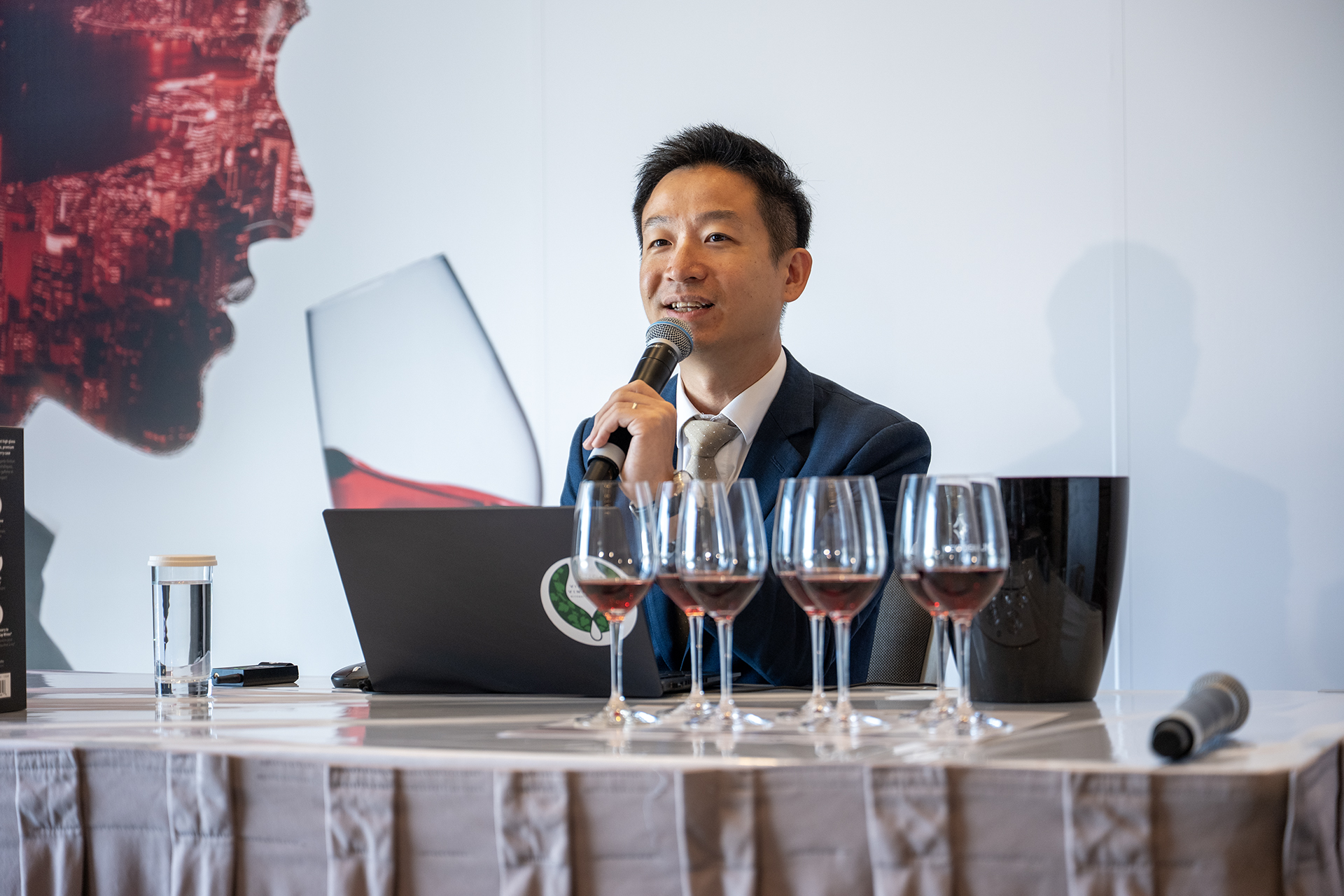
A blind-tasting seminar led by Reeze Choi, Asia’s No. 1 Sommelier, at Vinexpo Asia 2026 filled up immediately. No wonder: the theme was Pinot Noir, a grape beloved by wine enthusiasts.
Contents
The blind-tasting seminar led by Reeze Choi, Asia’s No. 1 Sommelier, at Vinexpo Asia 2026 filled up almost immediately.
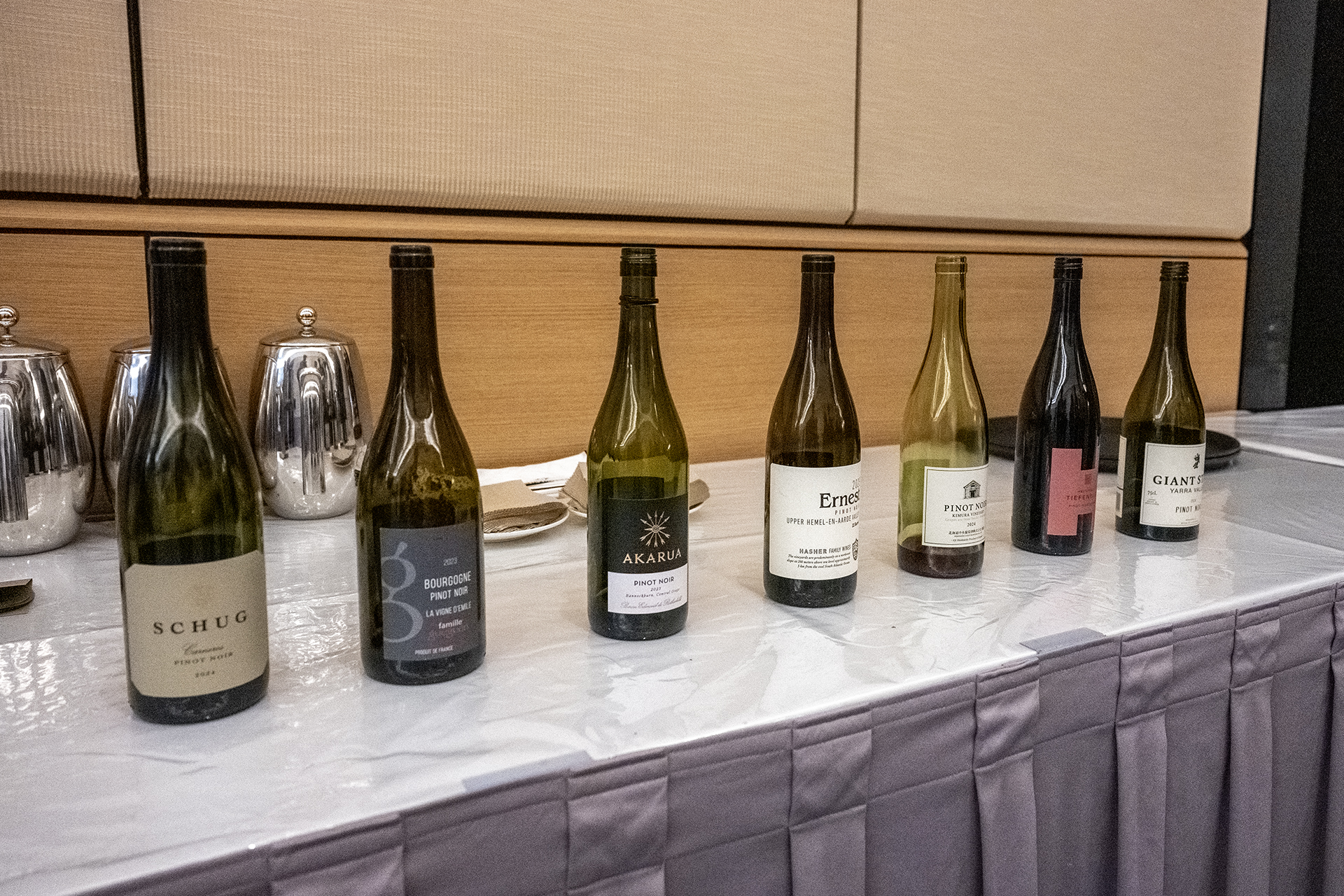
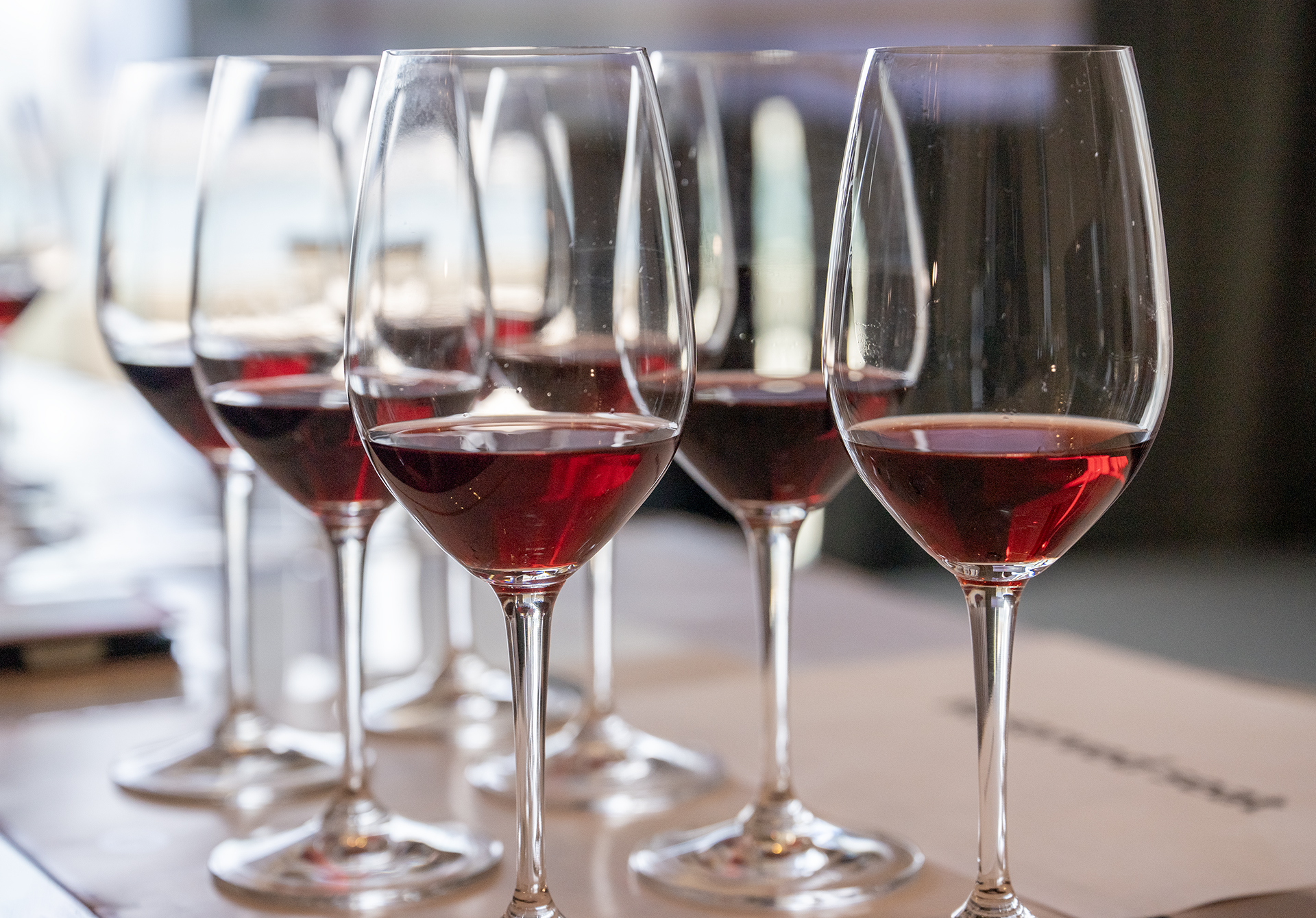
And it is easy to see why. The theme was Pinot Noir, one of the most beloved varieties among wine enthusiasts. Better still, the session offered a side-by-side tasting of seven Pinot Noirs from around the world — an irresistible proposition for anyone who loves wine.
Yet Choi opened with an unexpected remark: “Actually, I don’t like blind tasting.”
The audience responded with surprise and laughter. After all, Choi was preparing to compete in the 2026 Best Sommelier of the World competition. He continued: “I simply want to enjoy wine. But blind tasting is not only about your palate; it is also a way to train your knowledge.” That, in fact, was the essence of the seminar.
“Today, rather than trying to guess where each wine comes from, I want you to see how climate, soil and winemaking affect the wine.”
Even when the grape is the same Pinot Noir, its expression can change dramatically.
CHAPTER 01
What Shapes Pinot Noir
Before the blind tasting began, Choi explained the major factors that influence the character of a grape and the wine made from it.
■ Climate
Consider two regions: one where daytime temperatures reach 30°C and nights fall to 10°C, and another where the days are 20°C and the nights remain at 16°C. Which region is more likely to preserve acidity? The answer is the first. Grapevines continue to respire at night, and malic acid is consumed in that process. The warmer the night, the more malic acid is lost and the more acidity disappears from the resulting wine. In other words, “wine acidity is protected not by cool days, but by cool nights.”
Sunlight matters as well. Strong ultraviolet exposure can thicken grape skins and increase pigments and phenolic compounds. It also promotes seed ripening, helping tannins develop a riper texture.
Wind should not be overlooked either. In windy regions such as Oregon’s Van Duzer Corridor and Marlborough in New Zealand, grapes develop thicker skins as a form of protection. The result can be deeper color and firmer tannins.
■ Soil
Soil was one of the subjects Choi discussed with particular enthusiasm. “I love this part,” he said, before outlining the characteristics of several representative soil types.
Limestone
Limestone is famously associated with Burgundy and is rich in calcium. Grapevines absorb potassium and calcium through the same pathways, so in calcium-rich environments potassium uptake can be suppressed. The result is that acidity is more easily retained, pH stays lower, and the wine can taste sharper and more tightly structured.
Clay
Clay has excellent water- and nutrient-holding capacity. Fruit can therefore develop more generously, giving Pinot Noir roundness and softer tannins.
Granite
Granite drains well and is generally low in organic matter, which can restrain vine vigor. The resulting grapes may be smaller, with greater concentration, spice and aromatic intensity.
Volcanic soils
These soils are also found in some Pinot Noir sites in Hokkaido. Their iron content can encourage thicker skins, contributing to deeper color, abundant phenolics, and spicy or smoky nuances. Lower potassium can also help preserve acidity.
Sandy soils
Sandy soils drain extremely well. Grapes are less likely to develop very thick skins, often producing wines with paler color, silky tannins and lifted aromatics.
■ Winemaking
Even with the same grape, winemaking can further reshape its character. A representative example is Whole Cluster Fermentation, in which grapes are fermented with their stems rather than being completely destemmed. The technique has become increasingly common in Pinot Noir. Because stems contain potassium, they can reduce perceived acidity through neutralization. Stem-derived tannins can also create a smoother structural quality that differs from seed tannins.
Choi noted that whole-cluster fermentation can also leave a distinctive aromatic signature: black tea, cinnamon, clove and sandalwood-like spice can become more pronounced.
At Giant Steps in Australia, he explained, 40–70% whole-cluster fermentation is used in some wines, making these characteristics particularly apparent.
CHAPTER 02
Challenging Preconceptions About Japanese Wine
The flight also included a Pinot Noir from Chitose Winery in Hokkaido.
Choi smiled as he asked the room: “Some people probably think Japanese wine is light and thin.” Yet when the wines were tasted blind, many participants were unable to identify the Japanese wine. “If you couldn’t find the Japanese wine, then that preconception is wrong.”
His comment felt like a sign that Japanese wine has entered an era in which it can be discussed on the same international stage as wines from established regions around the world.
CHAPTER 03
There Is No Single Correct Answer
After revealing the wines, Choi offered the message that stayed with me most. “Blind tasting is not about being right or wrong. What matters is knowing which wine you liked. Why did you like it? Was it the fruit, the acidity, the spice? There is meaning in understanding that.”
The grape may be the same Pinot Noir, yet climate, soil and winemaking can make each wine remarkably different. What attracts us within that diversity is different for every person.
We have a tendency to search for the “correct” answer: Burgundy, Oregon, or perhaps Hokkaido. But perhaps what matters more is understanding why a wine moved us. Was it the fruit? The tension of its acidity? Or the aromas of spice and earth?
When we spend a long time in the world of wine, we can gradually become constrained by knowledge, ratings and the urge to find the correct answer. Choi’s seminar seemed to invite us to release that tension and encounter wine once again with a fresh mind.
Knowledge, after all, is a tool that can help us enjoy wine more deeply. It is not the enjoyment itself.
Sometimes we should set our preconceptions aside and trust our own senses. We can carry our knowledge and experience with us, while still remembering that, in the end, we are free to enjoy the glass that makes us think: “This is delicious.”
About the author
Miyuki Isobe
Stories covering the same region, newest first.
- WINERIES【Exclusive Interview with Takahiko Soga of Domaine Takahiko】“There Are Wines That Can Only Be Made in Japan” — Takahiko Soga on Nature, Deliciousness, and the Future of Japanese Wine3 AUG 2026Miyuki Isobe
- WINE & DININGSouth American Memories Meet Fine-Dining Technique at unito in Nakameguro — with Exceptional Sparkling Wines from Hirakawa Winery20 MAR 2026Miyuki Isobe
- WINERIESFrom a Winery in Manriki, Yamanashi: Cave an’s Winemaking That Has Mastered the Basics12 DEC 2025Miyuki Isobe
- WINERIESA Journey Embracing Time: The "Stay-Style Winery Experience" at Niki Hills14 SEP 2025NORIZO
- WINE TOURISMA Festival Touring Yoichi's Wineries: Open Farm Festival "La Fête des Vignerons" 20257 SEP 2025NORIZO
- WINERIESBringing Refreshing Relief to Sweltering Days! Delivered from Heavy Snow Country: Housui Winery23 JUN 2025Miyuki Isobe
Wineries in this region
REGIONAL WINERIESRead → Know → VisitWineries in 北海道. Find somewhere to visit.