
Misawa Vineyard is located at an elevation of 700 meters in Akeno, Hokuto City, Yamanashi Prefecture, with the Southern Alps to the west, Mount Kayagatake to the east, the Yatsugatake range to the north, and Mount Fuji to the south.
These mountains block rain clouds, giving the area some of the longest sunshine hours in Japan.
The combination of a cool high-altitude climate and abundant sunshine promotes grape ripeness, creating a rare balance between structural acidity and concentrated fruit.
At Misawa Vineyard, we grow grapes without herbicides or chemical fertilizers, while valuing a distinctively Japanese sense of craftsmanship.
We devote ourselves to making pure, elegant wines worthy of the Grace Wine name.
Compared with Koshu grown using conventional overhead trellising, Koshu from Misawa Vineyard has been found to produce smaller berries, higher sugar levels of around 20%, and a different composition of organic acids.
When we studied the organic-acid composition of Misawa Vineyard Koshu over several years, we confirmed that it contains substantially more malic acid than typical Koshu.
Malolactic fermentation is the process by which lactic-acid bacteria convert malic acid into lactic acid.
It works well with red wines and Chardonnay, but for many years it was considered unlikely to occur in Koshu because the variety generally contains relatively little malic acid.
Then, in 2017, one barrel made as an experimental lot underwent spontaneous malolactic fermentation. It was a moment that revealed the mystery of microorganisms, made possible precisely because Misawa Vineyard Koshu contains so much malic acid.
We are also pursuing massal selection, choosing vines from a winemaker's perspective that produce high-sugar fruit in small clusters with small berries.
Rather than relying on winemaking technique alone, we want the distinctive character of Misawa Vineyard to be expressed first and foremost in the vineyard itself.
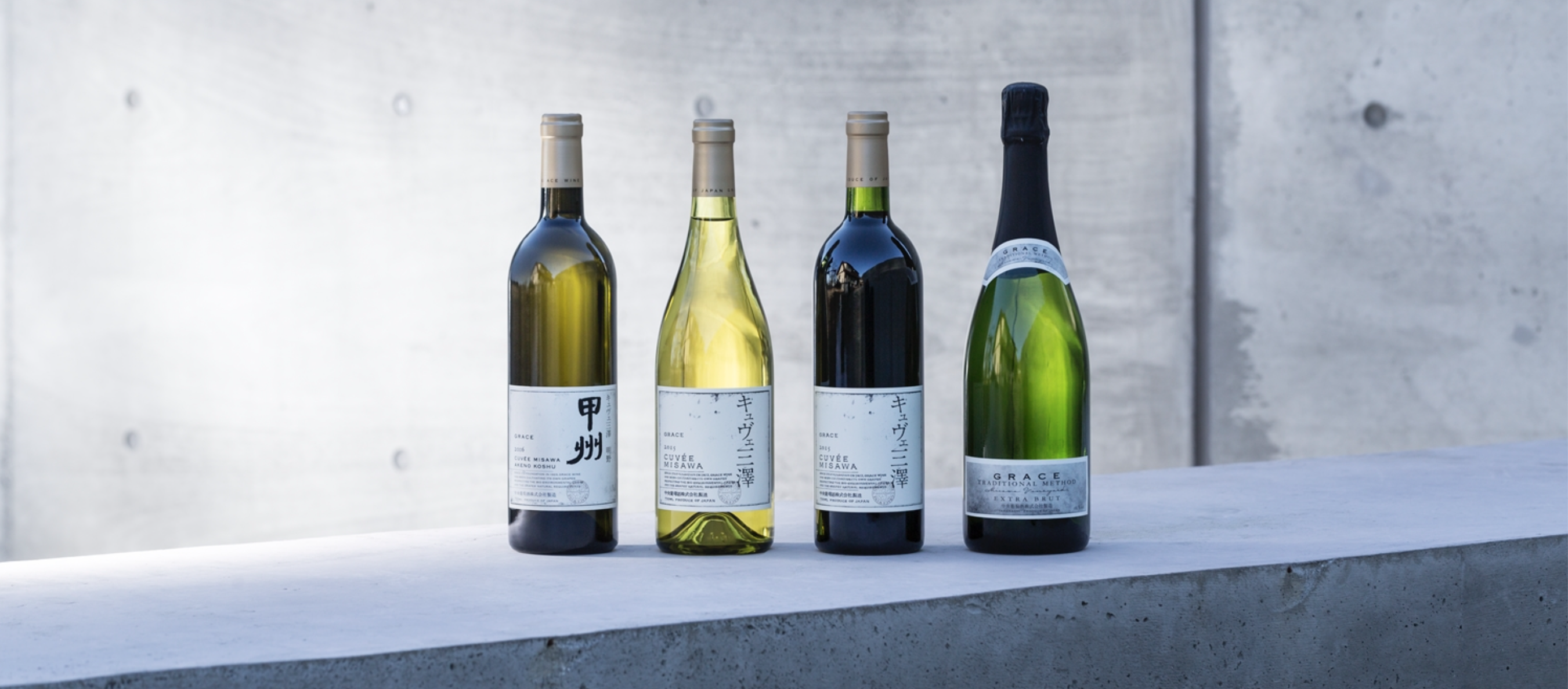
Cuvée Misawa Akeno Koshu became the first Japanese wine to win a gold medal at the world's largest wine competition in 2014. It continues to evolve, as if demonstrating how much potential Koshu still has.