
Mercian Corporation has announced the launch of a new initiative, the “Japanese Wine Support Business,” aimed at supporting Japan’s wine industry. The project evolves the consulting business led since 2022 by Takayuki Tamura of the Corporate Planning Department. It expands Mercian’s existing viticulture and winemaking consulting into comprehensive support across the wine industry, including procurement of raw materials and equipment, sales, and public relations. Here we report on the new-business presentation held on April 20.
More Wineries, but Structural Challenges Remain
Tamura began by explaining the current situation and challenges surrounding Japanese wine.
Japanese wine has attracted rapidly growing attention over the past decade, and the number of wineries has now expanded to more than 500. Wine is now made in every prefecture except Saga, and exports have grown about 3.5-fold over the past ten years, strengthening Japanese wine’s presence both domestically and abroad. At the same time, however, around 90% of wineries are small businesses, and research suggests roughly 40% of those are not earning sufficient profits. There are also structural problems: while winery numbers are increasing, grape harvest volumes are stagnating and in fact trending downward.
For example, more than five years can pass between preparing a vineyard, harvesting grapes, and finally selling wine, creating an exceptionally long period before investment can be recovered—an unavoidable issue rooted in the time scale of agriculture. Japan’s dependence on domestically grown grapes also makes it difficult to substitute raw materials when unexpected events such as bad weather occur, so shortages can translate directly into lost sales opportunities. The major challenges were summarized as fragile profitability, shortages of technical expertise and human resources, structural agricultural issues, and weak sales channels and marketing capabilities.
From “Consulting” to a Broader “Support Business”
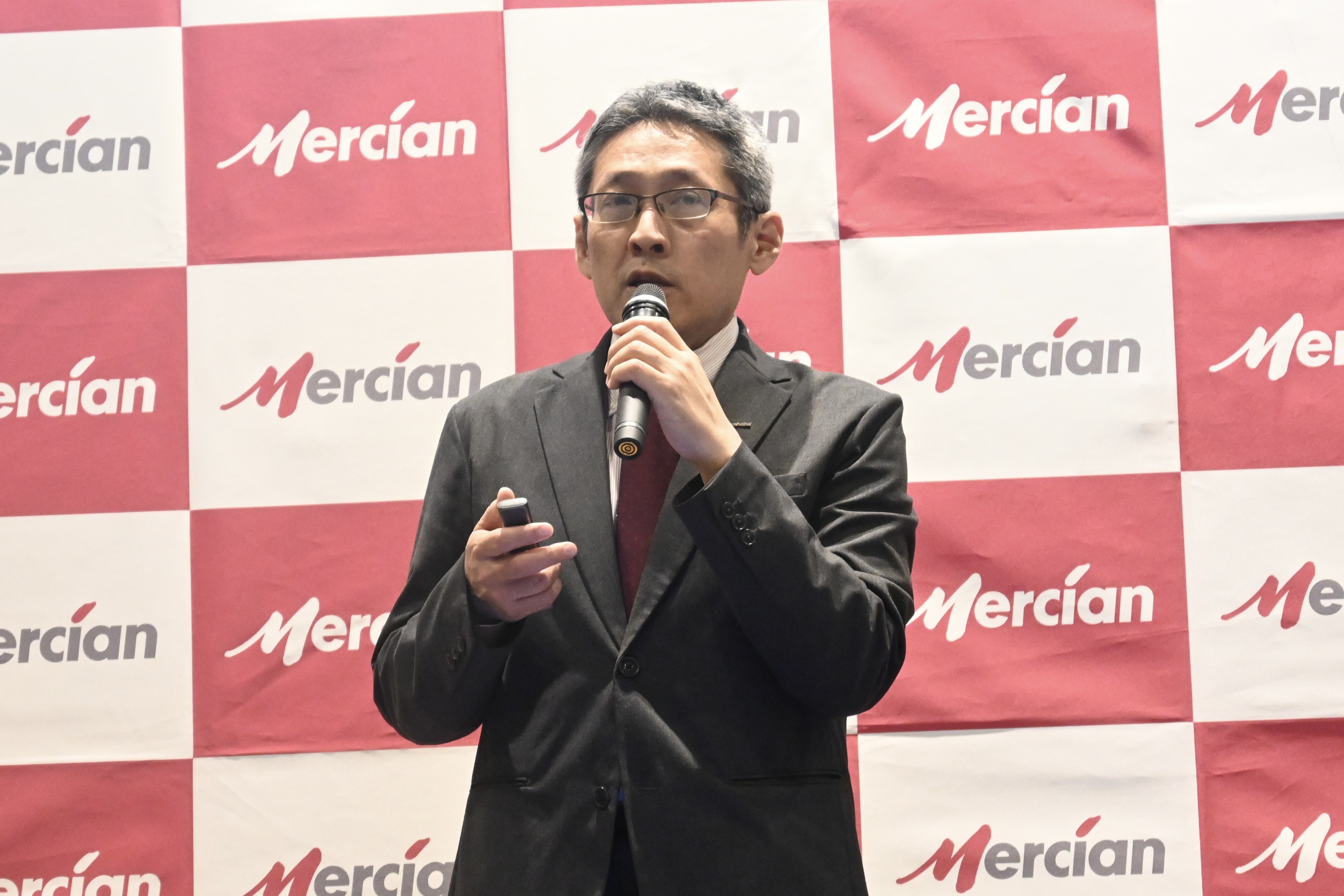
Against this backdrop, Mercian decided to redefine its traditional viticulture and winemaking consulting and broaden it into the “Japanese Wine Support Business.”
Until now, the consulting business mainly supported startup wineries in selected stages such as grape growing and winemaking. Going forward, support will no longer be limited by customer type and will extend to a wide range of players, including established wineries and local governments. Mercian will also expand its involvement across the entire process, from the stage before grapes are planted through distribution, sales, and tourism.
Behind that shift is the recognition that individual technical support alone is not enough to solve the issues described above and establish a sustainable wine region. The problems faced by each region and winery differ according to their stage of development, making a comprehensive support system necessary.
Château Mercian also possesses substantial assets, including the “human capital” of experienced people across generations and the intellectual property accumulated through roughly 150 years of winemaking. The new business also creates opportunities to put those assets to effective use.
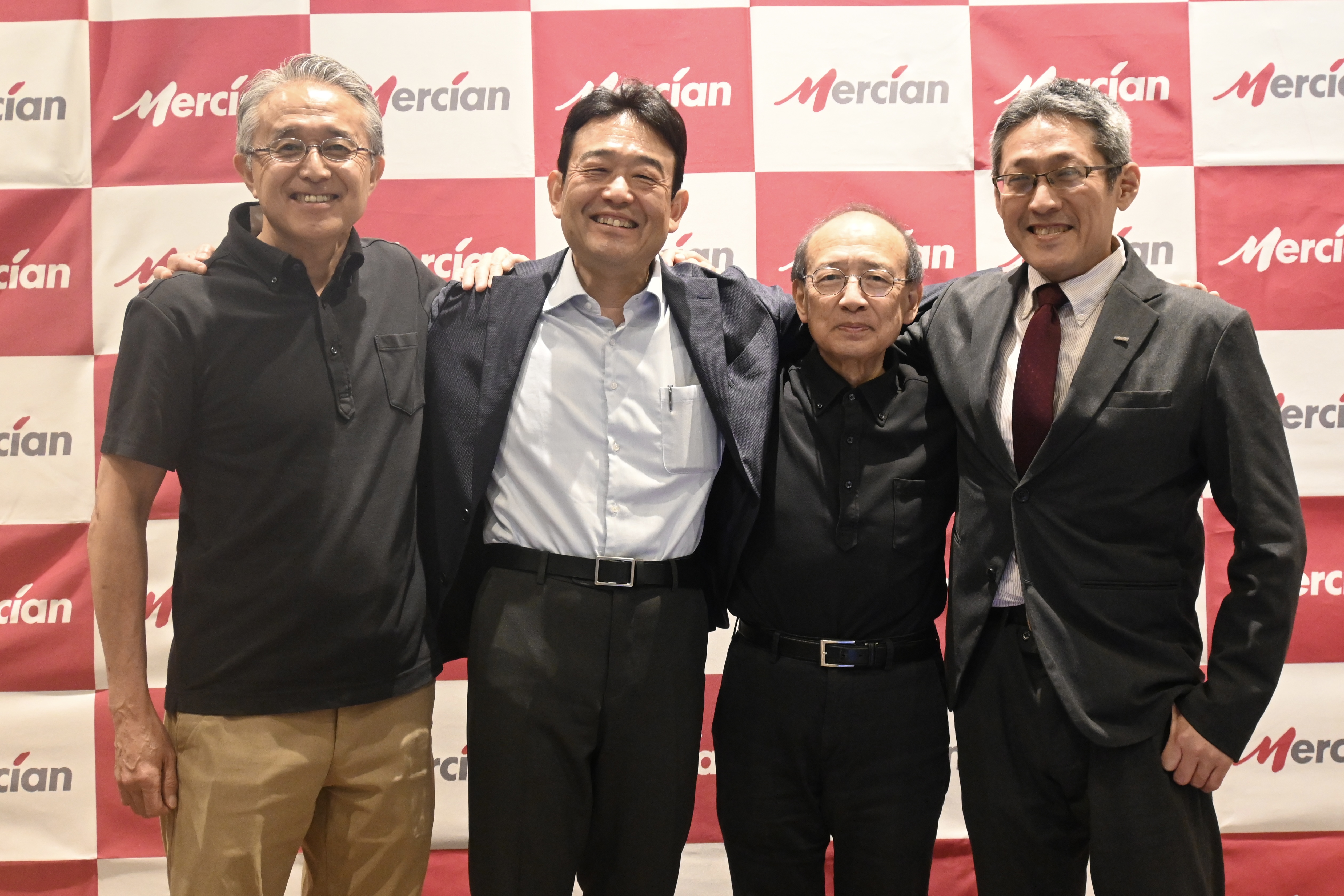
Members of the Japanese Wine Support Business team, from left: Atsushi Otaki, Akihiko Yamaguchi, Katsuhisa Fujino, and Takayuki Tamura
Three New Initiatives
The new business sets out three main directions.
1. Expanding the scope of the consulting business The key point is “support before planting.” Previously, consulting often began only after problems had emerged. Going forward, involvement from the earliest stages—including vineyard design and vine selection—should help minimize lost time. As noted above, support will also extend beyond startup wineries to customers at many different stages.
2. Launching a joint-procurement business
Mercian will act as an intermediary between small wineries scattered across Japan and equipment/material suppliers, supporting appropriate selection and joint purchasing. This should allow wineries to invest in equipment more efficiently while also helping suppliers forecast demand more reliably.
3. New business: “Your Own Winemaking Experience”
This project matches individuals who want to experience winemaking with wineries that lack the resources to operate tourism programs on their own. A trial program has already been underway since October 2025.
By positioning wineries as regional hubs and increasing exchange through hands-on experiences, the initiative aims to generate broader economic benefits for local communities.
Linkhttps://nihonwine.jp/enjoy-nihon-wine/event_report/hanamaki-winemaking-report202512/
The Value Seen in Voices from the Field
Mercian has provided consulting at 13 locations across Japan to date. Each region and winery faces different challenges, and the company says those experiences have helped it accumulate knowledge and apply what it has learned.
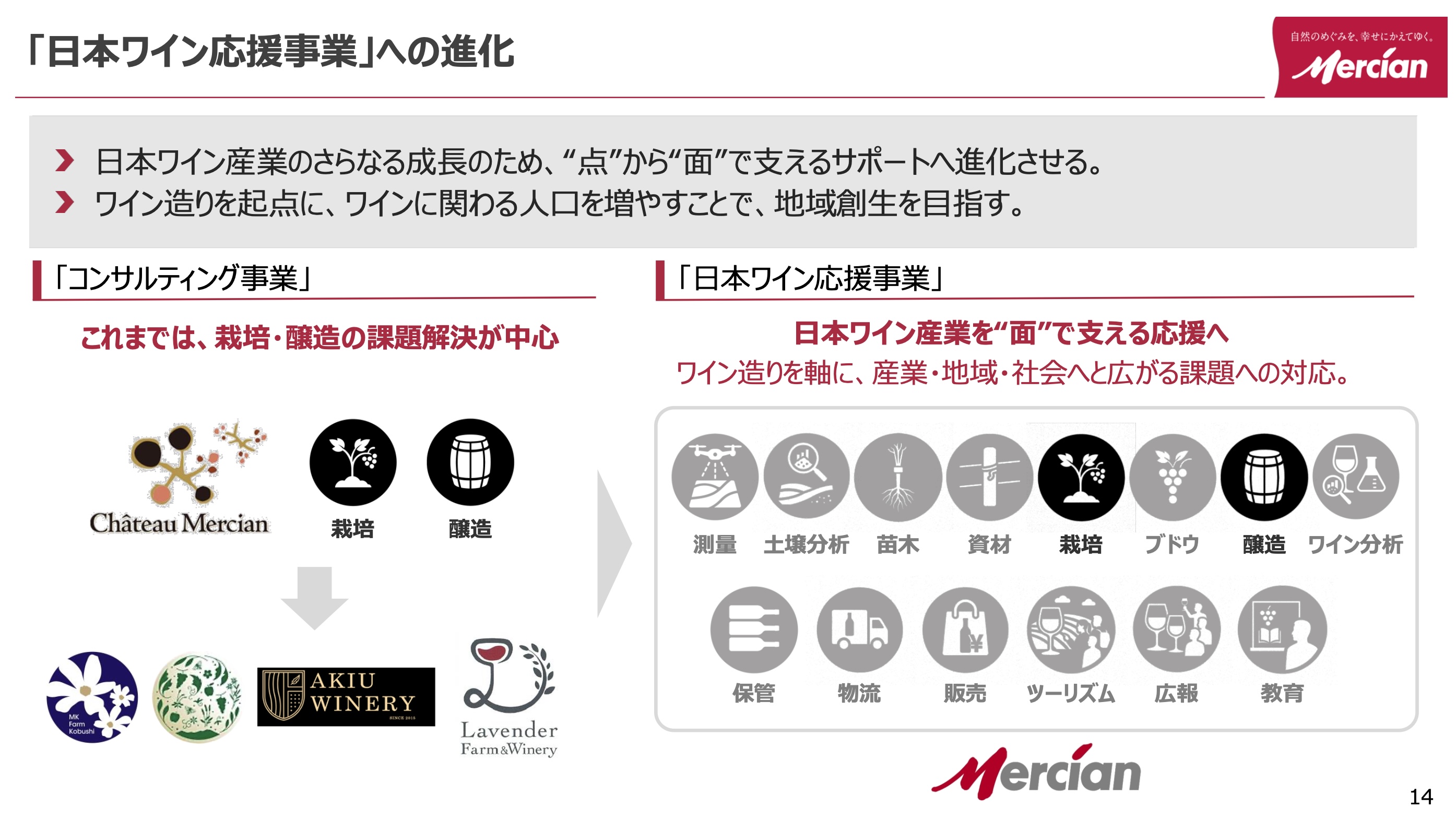
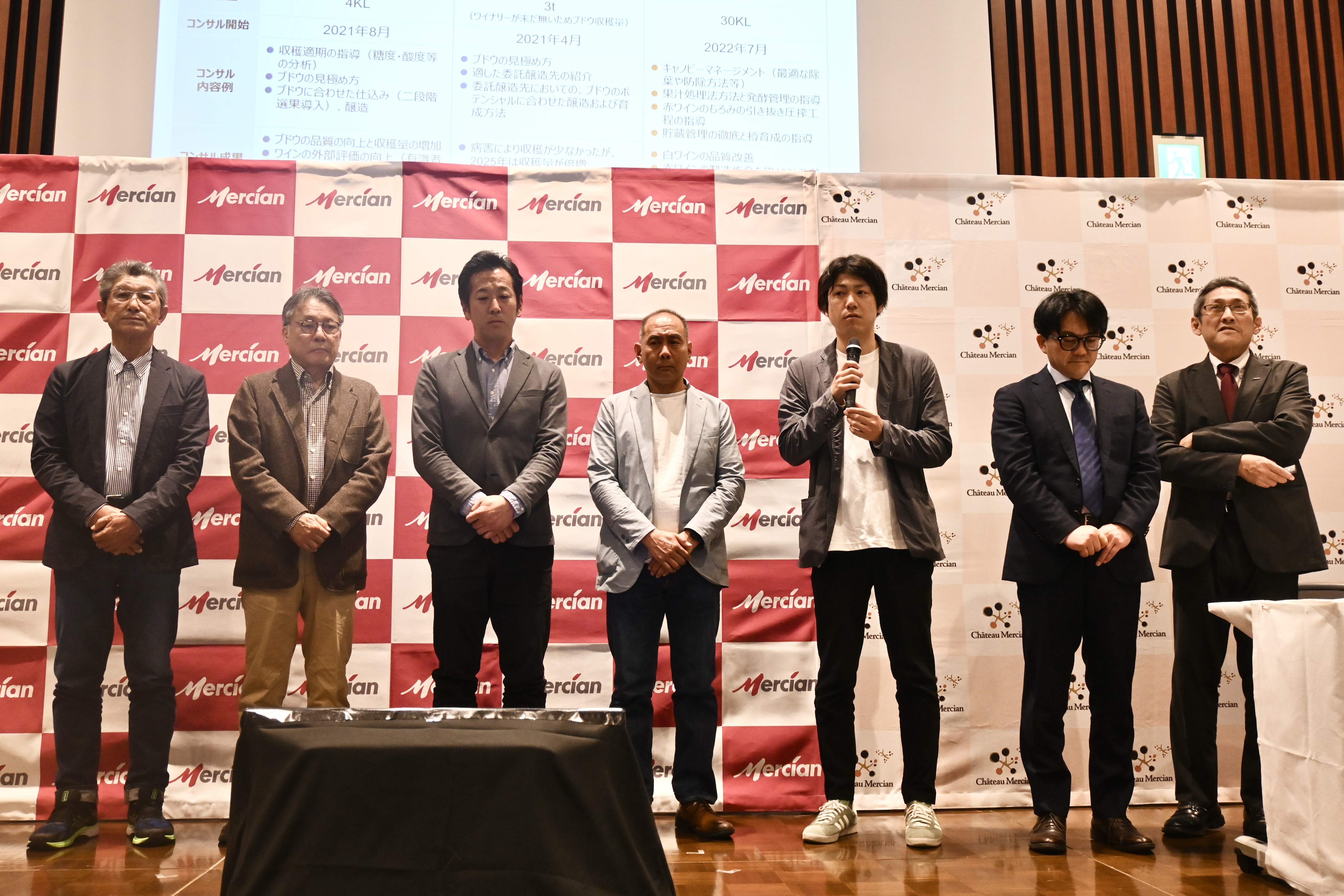
Several wineries and producers currently receiving consulting support spoke at the presentation.
They discussed their impressions, ambitions, and reasons for seeking consulting. One recurring response was that “in a field where people can easily become isolated, not only technical support but also human support and information sharing are extremely reassuring.”
Sharing not only technical knowledge about viticulture and winemaking but also how to make judgments and think through decisions appears to provide substantial practical and emotional support. Tamura also emphasized the benefits of building a community in this respect.
Opening Mercian’s intangible assets—technology, people, and networks—to outside participants can help build wine regions. That is also a direct expression of Château Mercian’s vision of “making Japan one of the world’s great wine-producing countries.”
Toward an Industry That Supports Itself
Japanese wine is unquestionably expanding, but sustainable growth will require solutions to its structural challenges.
We hope this new support business helps Japanese wine as a whole advance to its next stage as an industry.
Attention will now turn to whether the industry can shift away from a model dependent on the efforts of individual wineries toward a structure in which the industry supports itself collectively.
In Part 2, we introduce the first case under this initiative: the winemaking vision of Biei Farm. The hugely popular boulangerie VIRON is creating a winery.
Linkhttps://nihonwine.jp/nihonwine-news/mercian-release202605-2/