
KNOWLEDGE
Who Decides What Counts as “Fine Wine”? — The Question Posed by Asia’s No. 1 Sommelier Reeze Choi
Contents
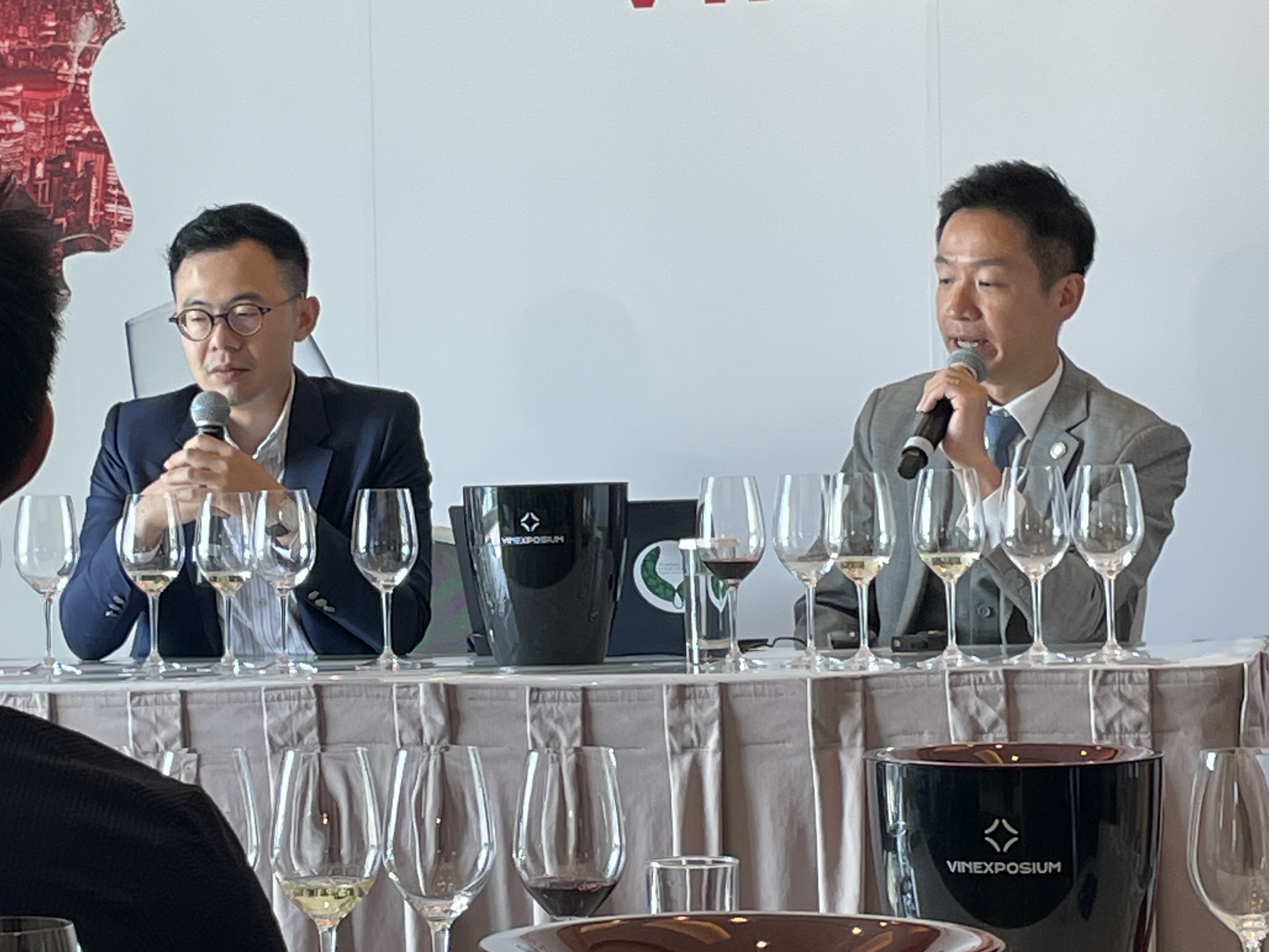
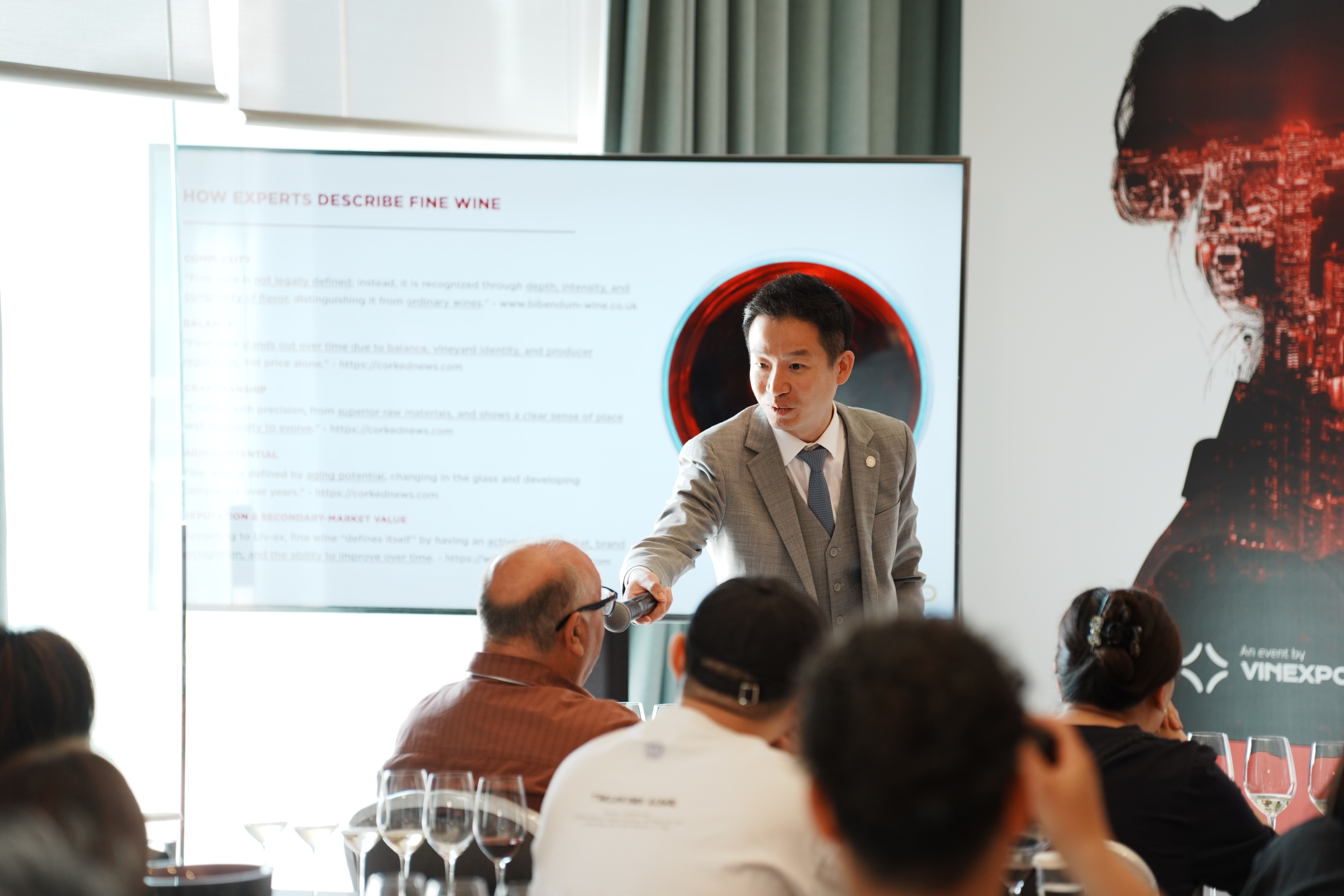
“What does fine wine mean to you?” — At a masterclass during Vinexpo Asia 2026, Asia’s largest wine trade fair, held in Hong Kong from May 26 to 28, Reeze Choi, who is preparing to compete in the World’s Best Sommelier competition, and Kevin Lu, Taiwan’s first Master Sommelier, posed this question to the audience.
Is it a classified-growth château from Bordeaux? A Grand Cru from Burgundy? Or a rare wine traded for hundreds of thousands—or even millions—of yen? Participants in the room offered answer after answer: “a long finish,” “ageing potential,” “complexity,” “an expensive wine.”
Interestingly, Choi said he had discussed the subject of fine wine with AI beforehand.
He argued, “Fine wine is too expensive. It pushes younger generations away. Isn’t it something that exists only for wealthy people?” The AI’s answer, apparently, was: “You are wrong.”
CHAPTER 01
How AI Defines “Fine Wine”
Choi had argued that “fine wine is too expensive and alienates younger generations,” but the AI pushed back directly. It reportedly cited examples such as Viña Tondonia from Rioja, Spain, and Château Musar from Lebanon. Both are internationally respected wines, but neither belongs to the ultra-expensive category occupied by names such as Lafite or Romanée-Conti.
The AI, he said, made this argument: “Fine wine is not about price. It is about history, place, and story.”
Certainly, qualities commonly associated with fine wine include complexity, ageing potential, expression of terroir, rarity, and critical acclaim. But are these truly absolute requirements?
The AI’s answer was that “fine wine is defined not by price, but by history, regional identity, and the ability to express the place it comes from.”
CHAPTER 02
What Are the Conditions for Fine Wine?
As the audience responses to the opening question suggested, wine professionals commonly cite complexity, balance, ageing potential, rarity, expression of terroir, artisanal production, and high objective ratings as characteristics of fine wine.
But when each of these conditions is examined more closely, the boundaries become far less clear.
Take “small production,” for example. It is often described as a hallmark of fine wine. Yet prestigious estates such as Château Lafite and Château Latour produce hundreds of thousands of bottles each year. They can hardly be called tiny producers.
Then what about “high price”? Kevin introduced a survey suggesting that many consumers begin to expect “fine wine” once the price exceeds HK$500, roughly ¥10,000. Yet there are producers working single vineyards, harvesting by hand, and making wine artisanally whose bottles still sell for only a few euros.
In other words, market price and quality do not necessarily correspond. Price is strongly influenced by factors such as brand power, marketing, history, and reputation.
CHAPTER 03
Experience, Not Price
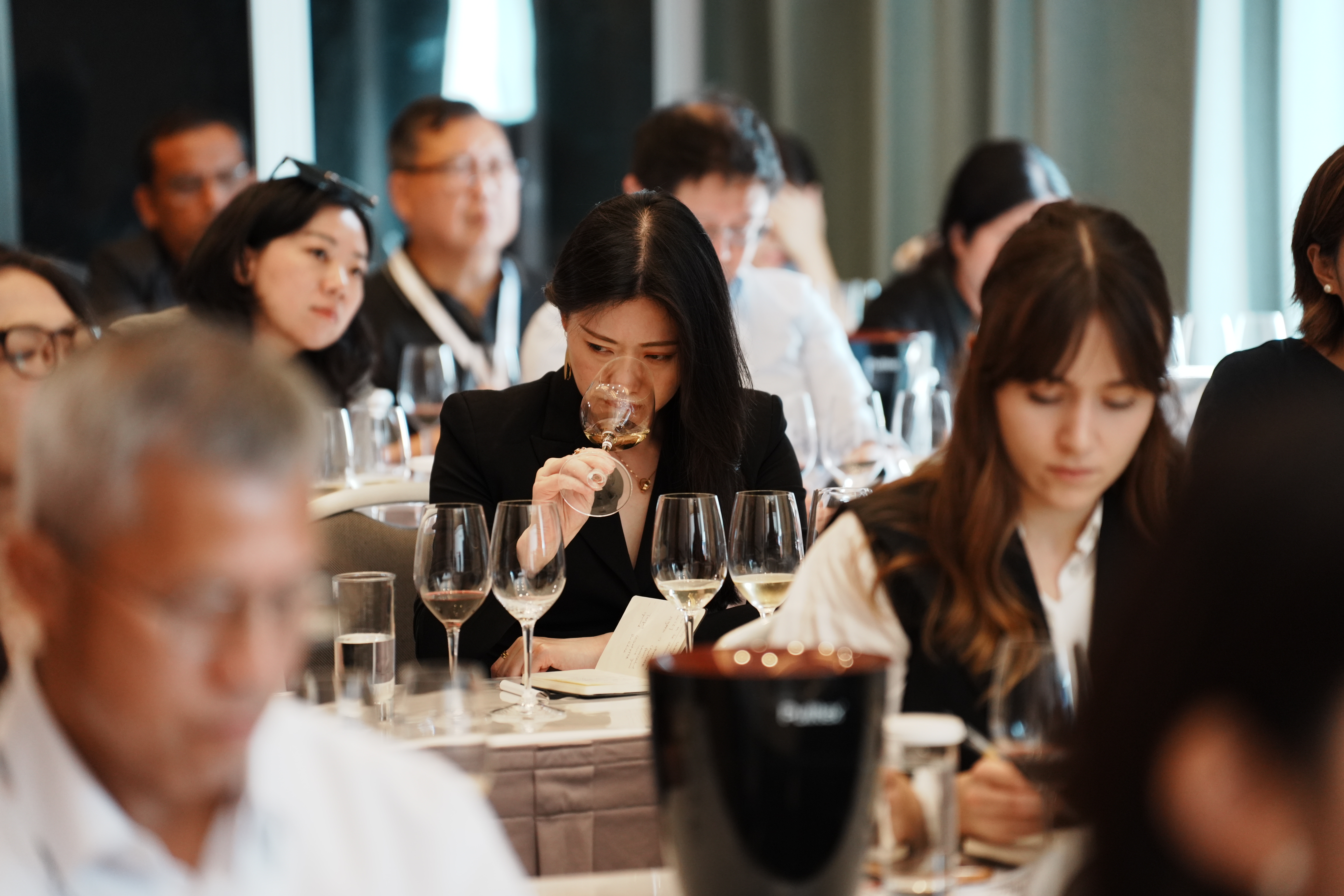
The six wines served at this seminar were certainly not among the most expensive wines in the world.
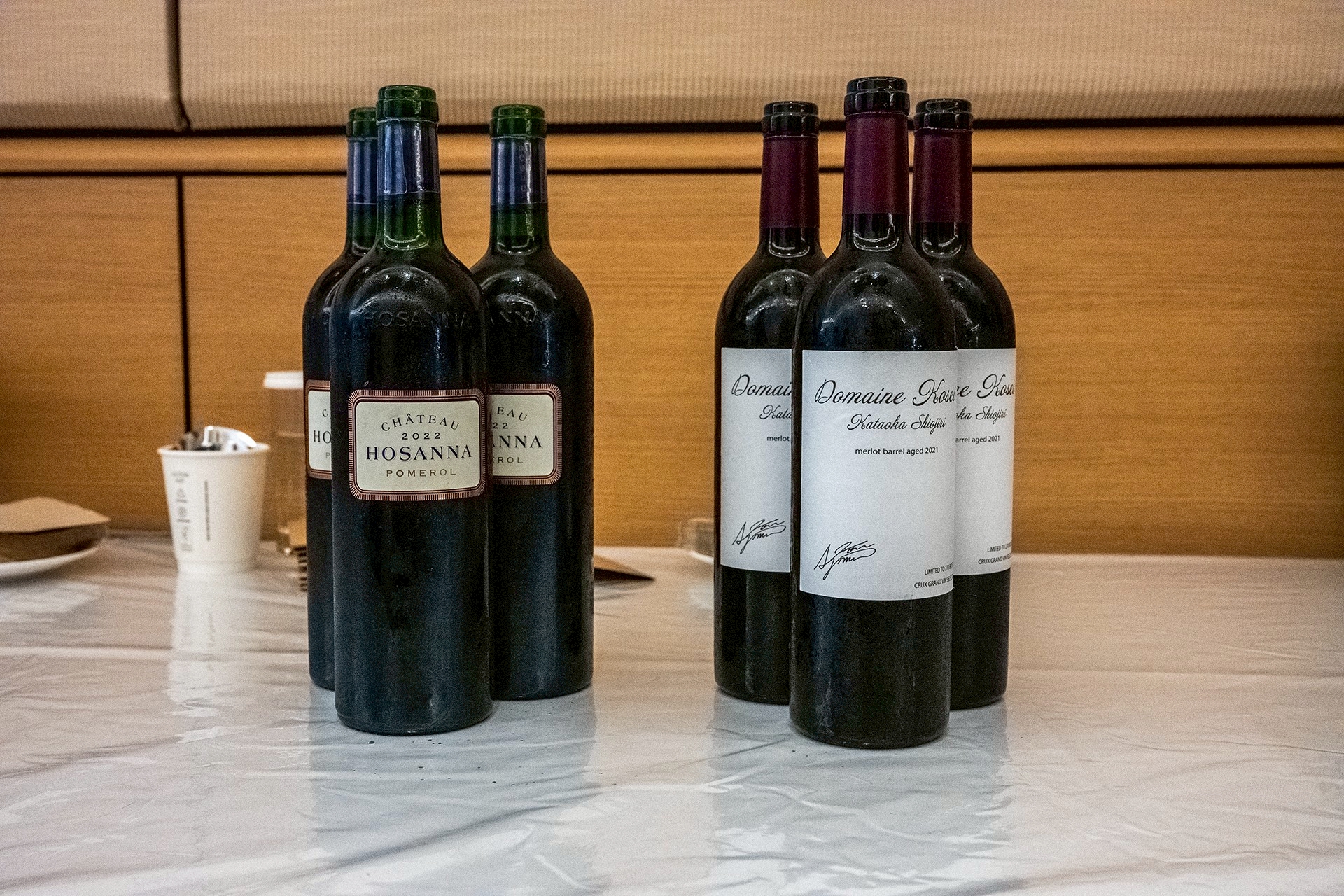
They included Riesling Sekt from a biodynamic producer in Germany, Chardonnay from Oregon, a white wine from Graves in Bordeaux, Merlot from Domaine Kosei in Shiojiri, Nagano, and Château Hosanna from Pomerol. Their price points and levels of fame varied widely.
Yet Choi said, “For us, every one of these is a fine wine.”
Behind that statement was an unforgettable experience from his own career. When he was a young sommelier working at the then three-Michelin-starred Joël Robuchon restaurant in Hong Kong, the wine list was filled with Bordeaux bottles priced above HK$1,000. The only white Bordeaux on the list below HK$1,000 was Château Olivier from Graves. As a young sommelier, he was delighted when he finally had the chance to taste it.
“This quality—for HK$980?”
He was astonished by its completeness: rich aromas suggesting ripe tropical fruit, apricot, and honey; beautiful integration with oak; and acidity that retained vivid freshness even while expressing the warmth of the vintage.
Yet the market did not commonly speak of that wine as “fine wine.” “Why is a wine this wonderful not called fine wine?” The question he asked himself then may well have been the origin of the question he posed to the audience at this seminar.
Now, back to the six wines in front of us. Why did the two sommeliers say, “For us, every one of these is a fine wine”? Their answer was that the wines express their place, carry the producer’s philosophy, and move the person drinking them.
Particularly memorable was the discussion of Domaine Kosei’s Merlot. Annual production is only 300 bottles. The wine is already highly regarded in Japan, but it is still far from widely known around the world.
The AI had reportedly judged that this wine was “not a fine wine because it has no history.” Yet many participants who tasted it at the seminar were surprised by its quality.
If this wine is capable of moving you, then isn’t that precisely what a true fine wine should be? That was the question the two sommeliers put to the room.
Watch Reeze Choi discuss Domaine Kosei during the actual masterclass (about two minutes).
CHAPTER 04
Who Decides What Fine Wine Is?
When we stop and examine the phrase “fine wine,” it begins to seem like an extraordinarily ambiguous concept.
The market judges by price. Some critics judge by scores. History judges through tradition. But in the end, we are the ones who actually drink the wine. That is why the two sommeliers closed with this message.
A fine wine is not necessarily one of the most expensive wines in the world. It is something you taste for yourself and whose value you discover for yourself. In the wine world, attention can easily be drawn to price and classification. But perhaps the real pleasure lies in encountering the individuality of a place and the intentions of its producer, and evaluating the wine through your own senses.
If so, perhaps the answer to “What is fine wine?” can never be fully supplied by a textbook, an AI, or a critic. In the end, perhaps each of us must discover the answer through our own encounter with wine.
So, what kind of wine is “fine wine” to you?
About the author
Miyuki Isobe
Stories covering the same region, newest first.
- WINE & DININGThe Manns Wines You Think You Know May Be Out of Date — From Volume to Quality: Where Manns Wines Is Today6 MAY 2026Miyuki Isobe
- WINERIES【Part 2】Hot Springs and Wine: A Stay-at-the-Winery Experience at Domaine de Yunohara3 APR 2026Miyuki Isobe
- WINERIES【Part 1】Hot Springs and Wine: A Stay-at-the-Winery Experience at Domaine de Yunohara2 APR 2026Miyuki Isobe
- WINERIESUnderstanding the Terroir of "Ono", Nagano Prefecture: KIRINOKA Maker's Seminar (Chardonnay Edition)14 SEP 2025Miyuki Isobe
- WINE & DININGZenkoji Special Viewing × Nagano Wine "Drops of God" Premium Dinner Tour Was Held!15 FEB 2025Miyuki Isobe
- WINERIESCan a World-Class Pinot Noir Be Born? — Kirinoka Vineyards & Winery —6 JAN 2025Miyuki Isobe
Wineries in this region
REGIONAL WINERIESRead → Know → VisitWineries in 長野県. Find somewhere to visit.