
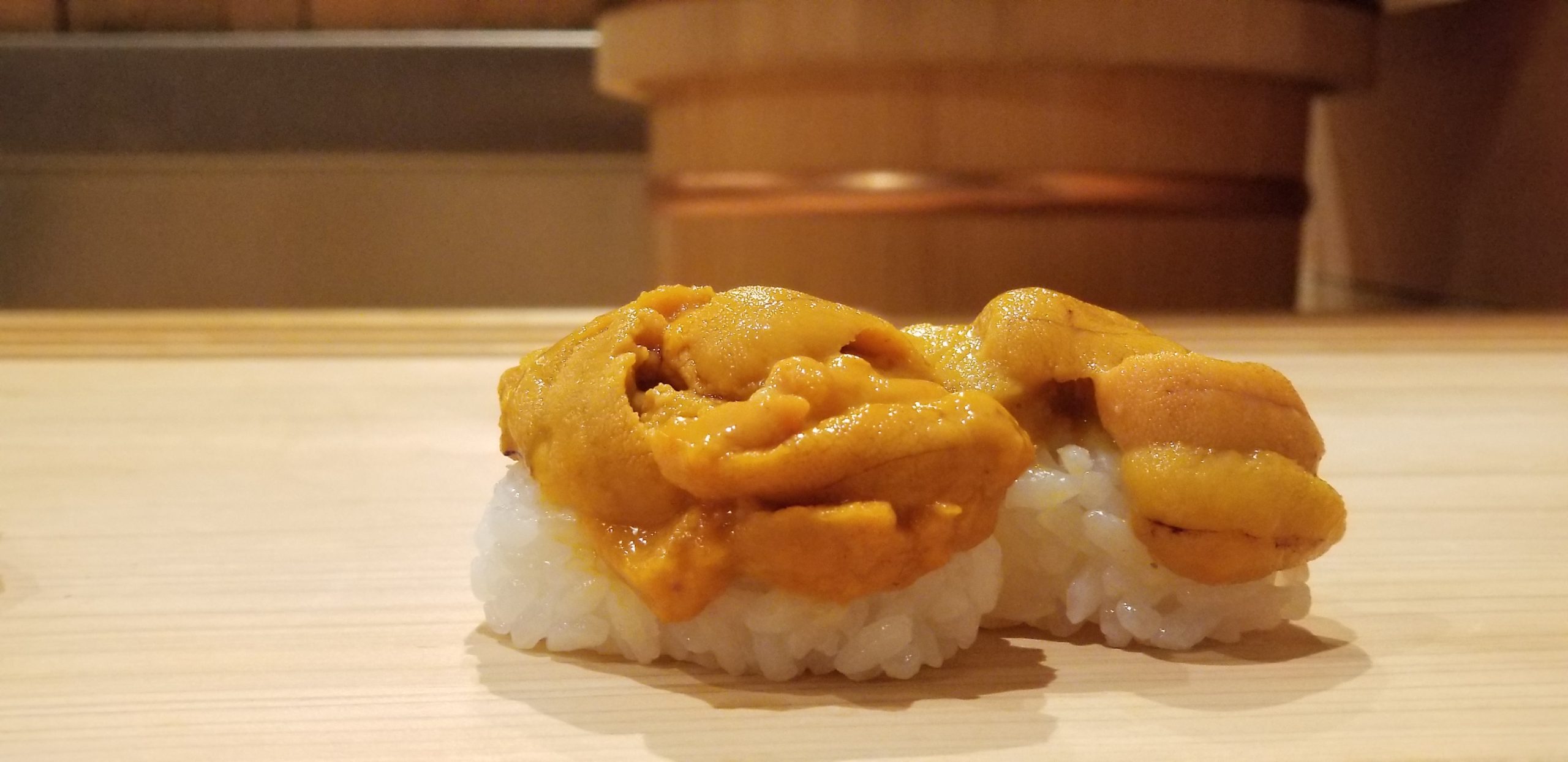
A luxurious ingredient characterized by a melting texture and rich sweetness,sea urchin (uni).
From sushi and pasta sauces to being served atop roast beef lately, its range of applications continues to expand.
Sea urchin, beloved by Japanese people.
In fact, previously in the manga "Oishinbo: A Taste Tour of All Japanese Prefectures - Yamanashi Edition (Volume 80)," it was suggested that "while wine and fresh sea urchin are a terrible pairing, Koshu grape wine does pair well,"which became a topic of discussion. (Published in a tankōbon released in September 2001)
Though this was about 20 years ago, we will now revisit"Koshu wine × sea urchin"pairing.
We would like to explore what sea urchin is... and the reasons why it pairs well with Koshu wine.
Basic Information About Sea Urchin
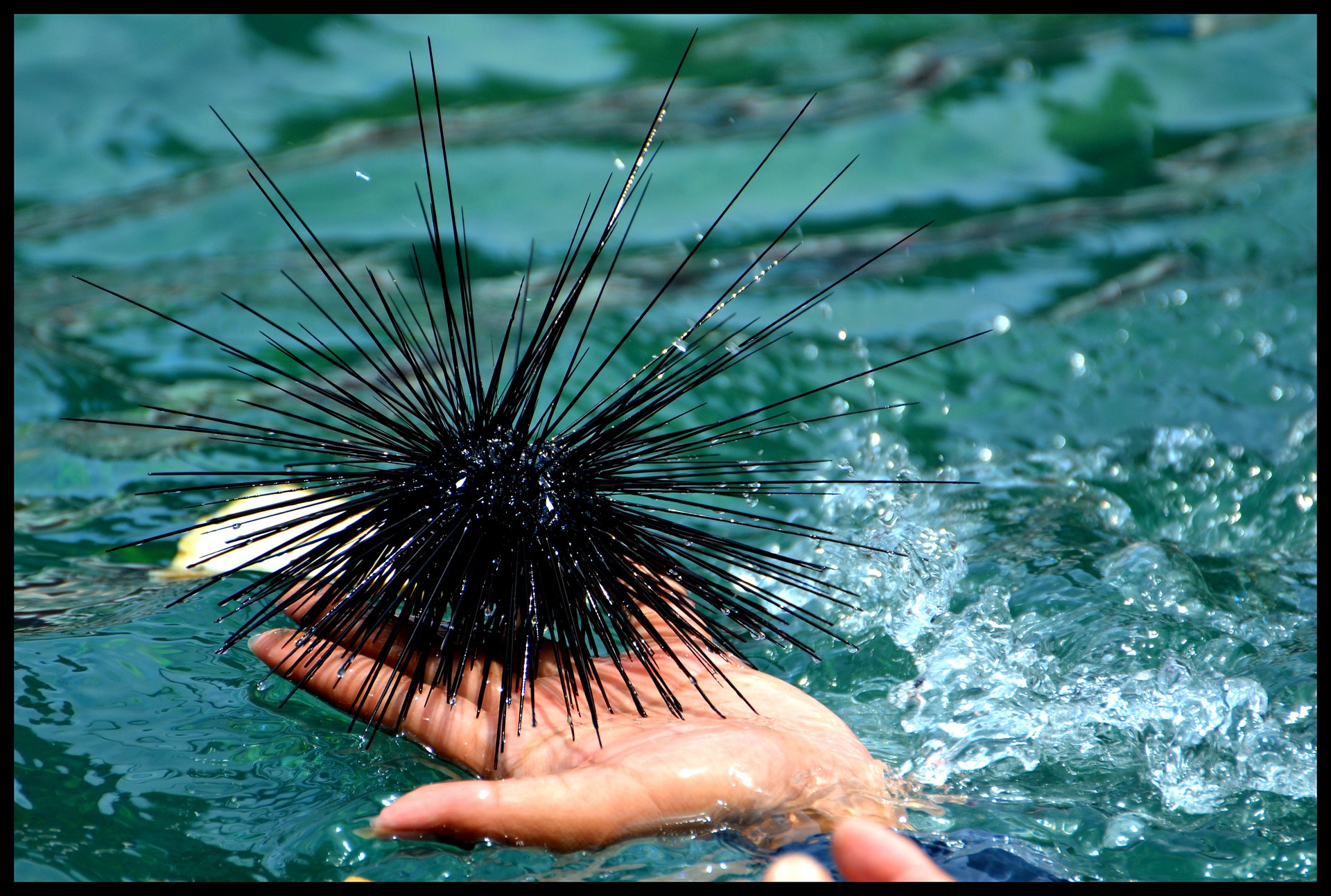
Sea urchin, characterized by its spiky, round shape.
Like starfish and sea cucumbers,echinodermsit is a creature belonging to this group.
The part we eat is called the"gonad,"tissue that produces eggs and sperm.
Because it has the function of storing nutrients from food, thequalityof its flavor changes depending on what it has been eating.
While it may be thought that all sea urchins are edible, only those classified as"Euechinoidea"are suitable for consumption.
Bafun uni and murasaki unifall into this category.
Incidentally, sea urchin is rich in B vitamins, vitamin E, and carotene, making it highly nutritious and attractive for more than just its delicious taste.
Personally, it's one of my favorite ingredients, soI'd like to consume it every day if possible.
Scientific Examination of Sea Urchin's Flavor
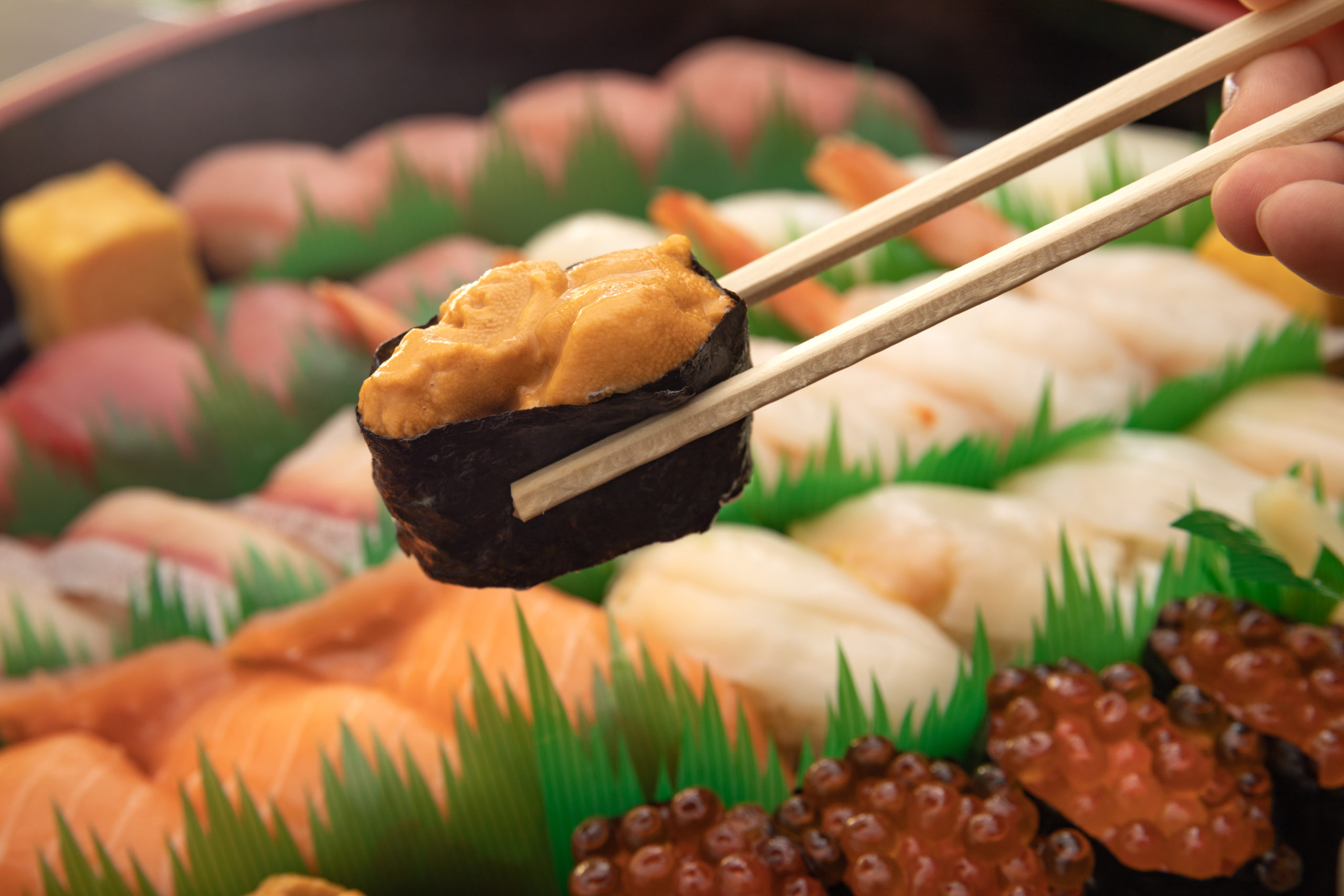
Now that we understand the basics of sea urchin, let's consider its flavor profile.
Sea urchin is an ingredient characterized by a creamy texture, rich sweetness, saltiness (derived from seawater), and refreshing flavor.
According to the extract components of marine products published in "Mastering Through Deliciousness" edited by the Future Food Development Project (Kamogawa Publishing 2002), sea urchin (bafun uni) contains these components:
- Glutamic acid
- Inosinic acid
- Alanine
- Glycine
- Glycine betaine
- Guanylic acid
- Valine
- Methionine
Among these, particularly important ismethionine.
The deliciousness of sea urchin comes from a slight "bittersweet" quality, and methionine plays a role in this bitterness.
Interestingly, if methionine is removed from sea urchin, it apparently tastessimilar to crab or shrimp...
When comparing snow crab, spiny lobster, scallops, and salmon roe,only sea urchin contains methionine.
The secret to its sweet, creamy yet elegant and tense flavor may be thanks to methionine.
Pudding and Soy Sauce
This is a wine column, but please allow me to share a bit more about sea urchin.
As mentioned at the beginning, sea urchin is a luxury ingredient, and while familiar, it's not something we eat every day. (Setting aside alum-preserved ones)
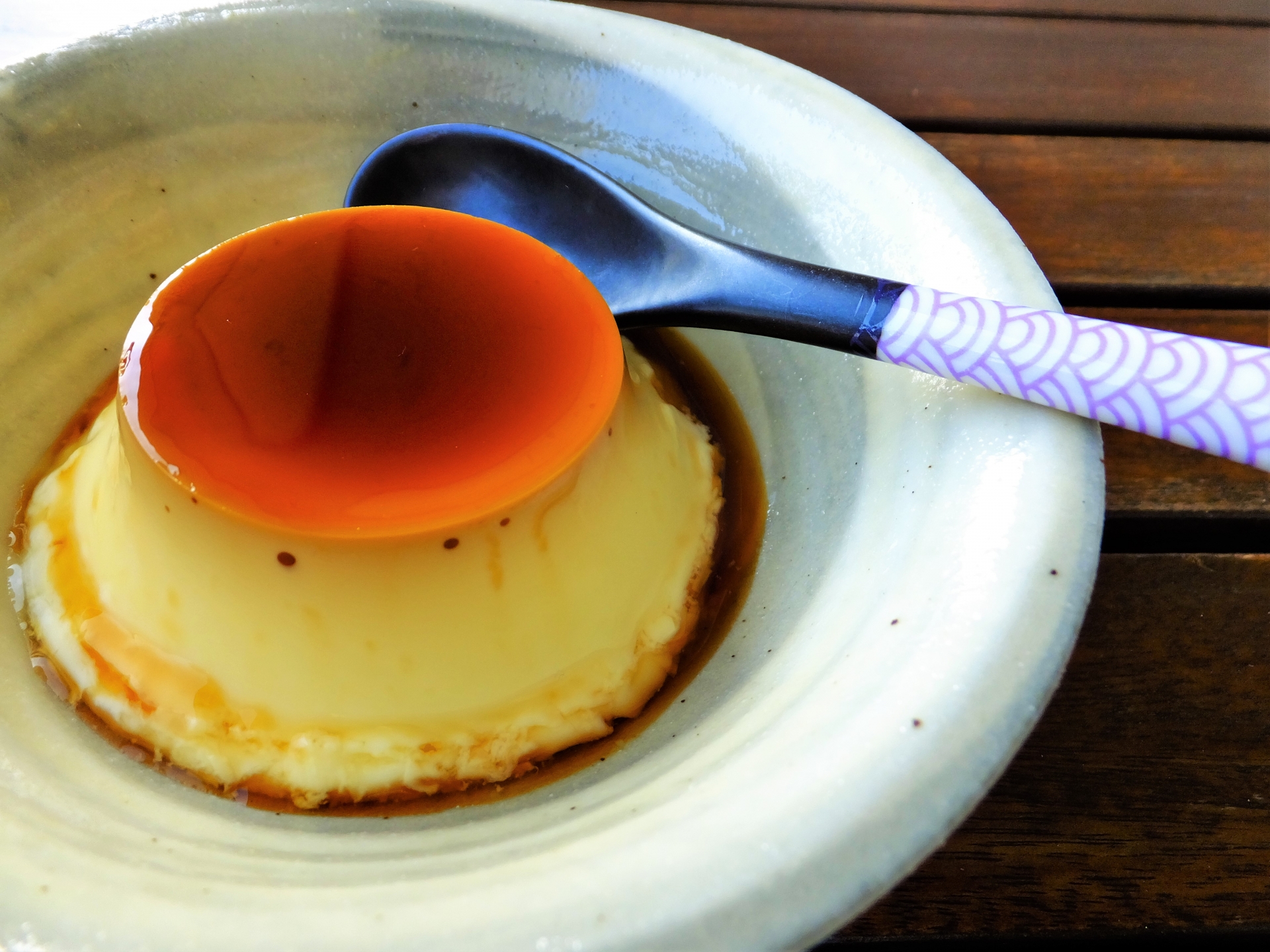
For those who absolutely want to eat sea urchin daily, someone discovered the rumor that"Pudding with soy sauce tastes like sea urchin!"
While the flavor direction is similar,the reality is pudding and soy sauce.
"Well, it's kinda like sea urchin..." is the feeling, and it has mostly becomean urban legend.
However, upon research, I discovered that the solution to creating sea urchin flavor was derived several years ago.
Specifically, blending "glycine, alanine, valine, glutamic acid, methionine" and "inosinic acid, guanylic acid" in saline solution apparentlyeasily recreates the taste of luxury sea urchin.
However, obtaining individual components is difficult for the averageperson and impractical.
Honestly, buying sea urchin is cheaper and safer, so it's best to keep this information as trivia only.
Koshu Wine and Sea Urchin?

With that much information about sea urchin, let's discuss its compatibility with wine.
One reason sea urchin and wine are said not to pair well is that itbrings out harshness and fishiness.
In recent years, sea urchin specialty restaurants recommend pairing with wine, but it's important to select odor-free (fresh luxury sea urchin, not alum-preserved) options andensure the wine itself is not too bold in character..
While there are foreign wines that pair easily with sea urchin, searching for them and memorizing brands is quite a task.
When you think "Let's have sea urchin and wine today," some people may find it troublesome if they can't prepare wine without much thought.
For such people,Koshu wine is very convenient.
It's wine that can be easily obtained not only online but also at wine shops, supermarkets, and convenience stores.
How to Choose Koshu Wine
That said, when pairing sea urchin with Koshu wine, meeting certain criteria will allow you to enjoy it even more deliciously.
First, those that have become more common recently,with citrus aromas..
It's still fresh in memory that the same aromatic components as Sauvignon Blanc were discovered in Koshu, and having a refreshing lemon-like flavor improves compatibility with sea urchin even more.
Next, ideallysimple and delicate..
Sur lie, barrel fermentation, barrel aging, and long-aged versions aren't bad, but to bring out the flavor of sea urchin, it's safer when various elements aren't too strong.
And,bitterness..
Koshu grapes are known for their distinctive bitterness, which is said to be related to containing more cinnamic acid tartaric acid esters and flavonol-related substances compared to other varieties.
Plus,it's even better if it evokes a slight saltiness.
Citrus flavor, delicate body, saltiness, and bitterness.
With Koshu wine that has this balance, it should demonstrate the best compatibility with sea urchin.
Gran Koshu × Sea Urchin
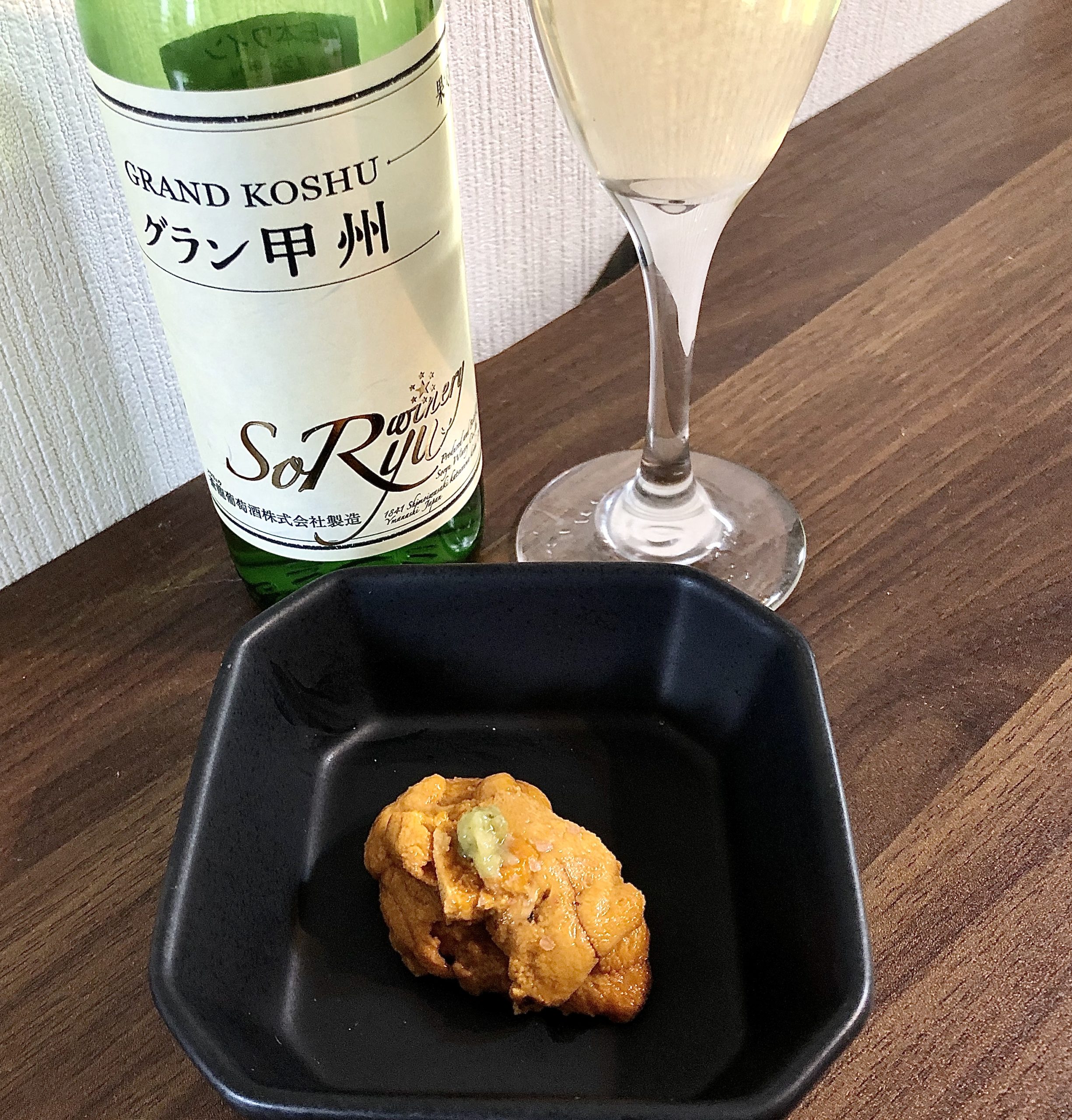
This time, I paired〈Gran Koshu〉from Soryu Wine Co., Ltd. with sea urchin.
This white wine uses Koshu grapes harvested in Yamanashi Prefecture and is a well-balanced bottle with citrus-reminiscent aromas, white flowers, moderate acidity, and running bitterness.
The sea urchin was creamy and rich in flavor, as expected.
When paired with 〈Gran Koshu〉,first the citrus flavor enveloped the sea urchin, creating a refreshing impression.
The wine's bitterness refreshes the palate, but the delicious flavor of sea urchin rises distinctly through the nose, sothe deliciousness of sea urchin stands out even more..
Adding rock salt, soy sauce, or lemon juice furtherincreases affinity..
Making the sea urchin's flavor more elegant, it was trulyan adult pairingthat could be enjoyed.
Let's Hold a Sea Urchin Party
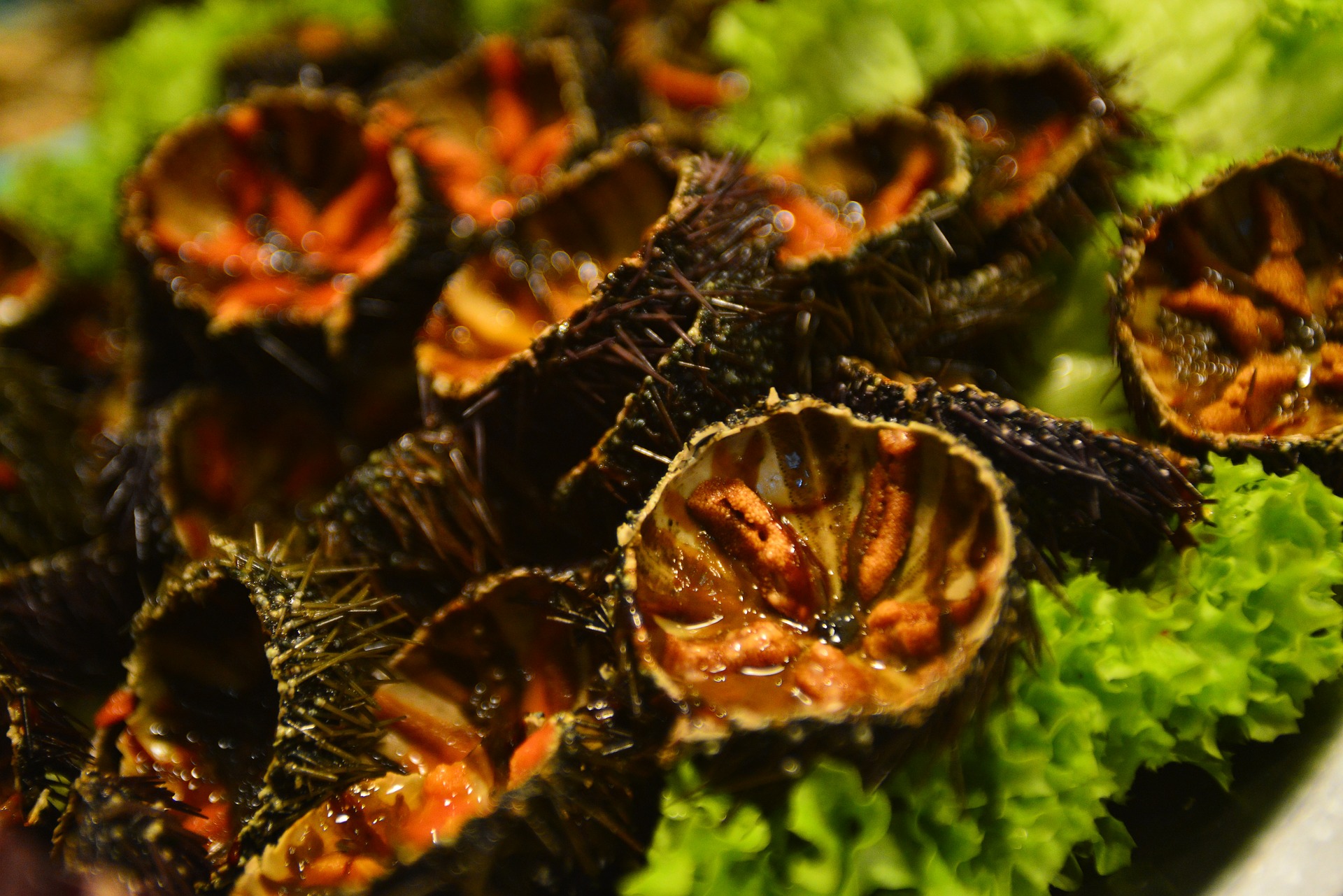
Lately, sea urchin is increasingly served in combination with beef.
Come to think of it, there's tempura too.
This time it's raw sea urchin, but when heat is applied or combined with other ingredients,it might be possible to consider combinations with other varieties as well..
While somewhat luxurious, why not gather various Japanese wines and hold"a sea urchin × wine party"?
When you do,please invite me too.
References
Research on Aromatic Components of Koshu Wine - The Japanese Society of Wine Sciences
Scientifically Understanding Deliciousness: "Umami"
Future Food Development Project ed., "Mastering Through Deliciousness" (Kamogawa Publishing 2002)